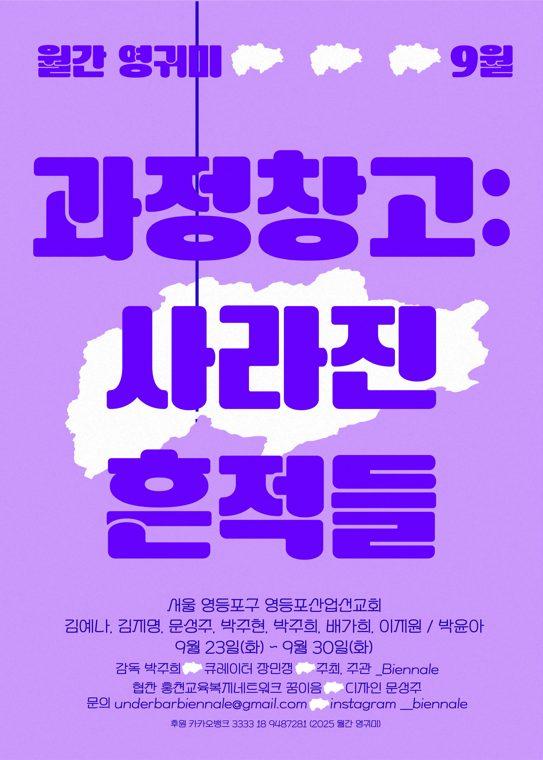
September · 9월
과정창고
사라진
흔적들Process Warehouse
Lost Traces
사라진
흔적들Process Warehouse
Lost Traces
예술감독 박주희Art Director, Joohee Park
강원도 홍천군 영귀미면은 감자와 옥수수, 한우와 인삼, 그리고 사과가 자라는 평범한 농촌이다. 그러나 이곳의 풍경은 단순히 ‘소멸의 농촌’이라는 말로 설명되지 않는다. 인구가 줄어드는 대신, 오히려 늘어나는 구간이 있고, 청소년의 비율마저 증가했다. 사라짐의 경계에서 오히려 삶의 가능성을 스스로 만들어내고 있는 마을, 그것이 오늘날 영귀미면의 얼굴이다.
이곳에서 시작된 ‘2025 월간 영귀미’ 프로젝트는 농촌의 과정을 따라가는 시도였다. 5월에는 마을의 삶을 떠받쳐온 빨래터에서, 6월에는 기억 속에서 희미해져가는 문방구에서, 7월에는 떠남과 돌아옴이 교차하는 버스정류장에서, 8월에는 청소년공간 꿈틀에서 전시가 이어졌다. 이제 다섯 번째 전시인 《과정창고: 사라진 흔적들》은 질문을 던진다. “결과만을 소비하는 우리의 삶 속에서, 과정을 어떻게 다시 바라볼 것인가?”
농촌의 삶은 계절의 흐름과 그곳에서 살아가는 사람들의 손길의 반복으로 이루어진다. 모내기와 추수, 흙을 일구고 곡식을 저장하는 일상은 늘 결과에 가려져 사라져간다. 하지만 그 안에는 무수한 손길과 기다림, 지워진 흔적들이 고스란히 담겨 있다. 이번 전시는 그 흔적들을 다시 불러내어, 도시라는 또 다른 과정의 현장 속에 잠시 저장하고자 한다.
결국 이 전시는 관객에게 묻는다. 우리가 살아가는 도시는 어떤 과정을 지워왔는가? 우리는 결과만을 소비하는 일상 속에서 어떤 흔적들을 다시 발견할 수 있을까? 《과정창고: 사라진 흔적들》은 농촌과 도시, 기억과 현재, 생산과 소비가 만나는 임시의 저장소이다.
Yeonggwimi-myeon is an ordinary farming village where potatoes, corn, Korean beef, ginseng and apples are grown. Yet its landscape cannot be explained simply as a “disappearing countryside.” Against the fall in population there are segments that are in fact growing, and even the proportion of young people has risen. A village that, at the edge of vanishing, is making its own possibilities for life — that is the face of Yeonggwimi today.
The project that began here has been an attempt to follow the processes of rural life. In May at the laundry site that supported the village; in June at the stationery store fading in memory; in July at the bus stop where leaving and returning cross; in August at the youth space Ggumteul. Now the fifth exhibition,《Process Warehouse: Lost Traces》, asks: in lives that consume only results, how might we look again at process?
Rural life is made of the turning of seasons and the repetition of people’s hands. Planting and harvest, tilling soil and storing grain are always eclipsed by the result. Yet within them lie countless gestures, waiting and erased traces. This exhibition calls those traces back and stores them, for a moment, inside the city — another site of process.
Ultimately the exhibition asks: what processes has the city erased? In daily lives that consume only results, what traces might we rediscover? 《Process Warehouse: Lost Traces》is a temporary archive where countryside and city, memory and present, production and consumption meet.
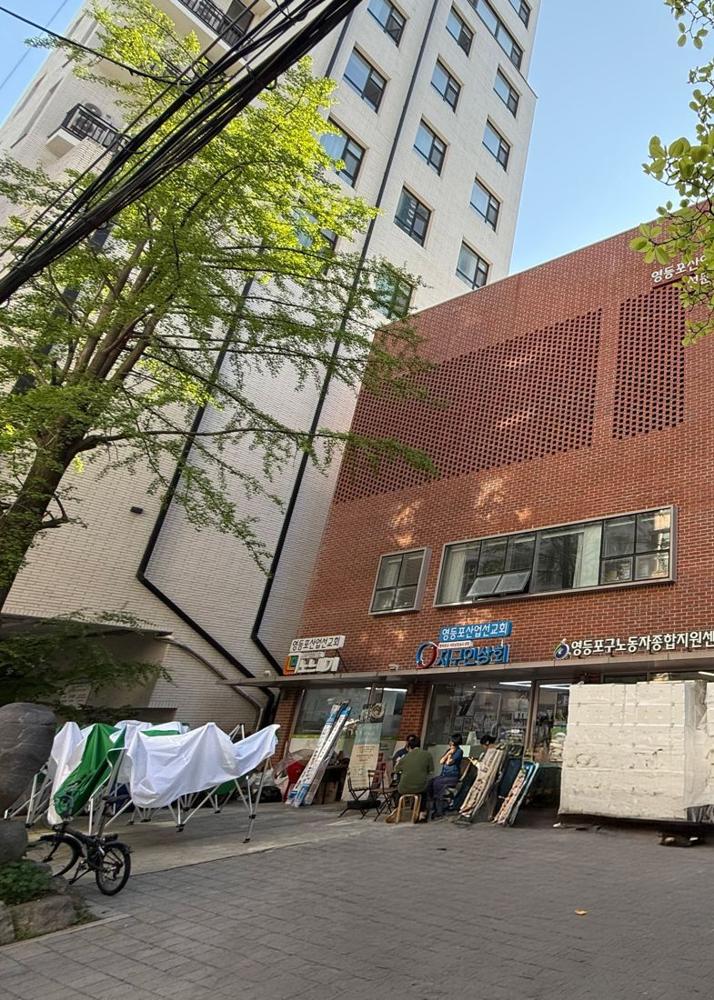
영등포산업선교회(이하 영등포산선)는 1958년 서울 영등포에 설립되어, 한국 교회가 산업화 과정 속에서 노동자들의 현실에 신앙으로 응답한 대표적인 사례로 꼽힌다. 1960~70년대 한국은 경제 개발을 이유로 장시간 저임금 노동이 강요되었고, 노동자들은 노동기본권조차 보장받지 못했다.
영등포산선은 이러한 상황 속에서 노동자들을 위한 교육, 상담, 권익 옹호 활동을 펼쳤으며, 성경공부와 노동법 교육, 노동조합 조직 훈련을 통해 노동자들이 스스로 권리를 인식하도록 도왔다. 한국 노동운동의 산실이자 민주화 운동의 거점으로 자리 잡았다.
이후에도 생활문화 교육, 생활협동조합과 신용협동조합 설립, IMF 실직 위기 속 노숙인 상담·보호 활동 등 한국 사회 노동인권과 민주화의 과정에 깊이 뿌리내린 역사를 간직하고 있다. 오늘날에도 사회적 협동조합과 대안적 금융, 지역사회의 자원 결집을 이어가며 ‘과정의 가치’를 실천하는 드문 공간이다.
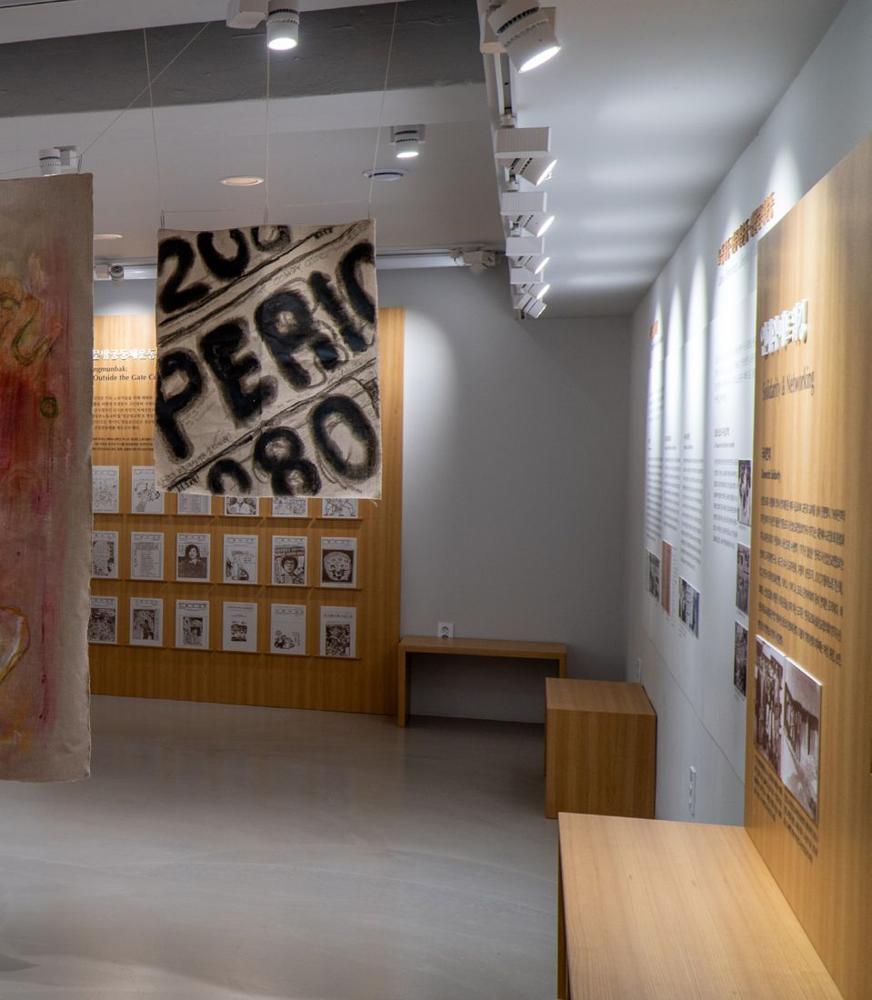
《과정창고: 사라진 흔적들》은 바로 이 지점에서, 농촌과 도시의 시간이 교차하는 장이 된다. 영귀미에서 수확한 흔적들이 다양한 매체와 기록을 통해 자리하고, 영등포산선이 간직한 과정의 기억과 나란히 놓인다.
Founded in Yeongdeungpo, Seoul in 1958, the Yeongdeungpo Urban Industrial Mission is a landmark example of the Korean church responding in faith to the reality of workers during industrialisation. Through the 1960s and 70s, long hours and low wages were imposed in the name of economic development, and workers were denied even basic labour rights.
The mission ran education, counselling and advocacy for workers, helping them recognise their own rights through Bible study, labour-law education and union organising training. It became a cradle of the Korean labour movement and a base for the democratisation movement.
Its history runs deep through Korea’s labour rights and democratisation: cultural education, the founding of consumer and credit cooperatives, counselling and shelter for people made homeless in the IMF crisis. Today it continues with social cooperatives, alternative finance and the gathering of community resources — a rare space that practises the value of process.
Here the exhibition becomes a field where rural and urban time intersect. Traces harvested in Yeonggwimi are placed, through various media and records, alongside the memories of process preserved at the mission.
어린 시절 자연과 가까이 닿아 있던 일상에서 나는 모든 생명에 교감할 수 있는 아우라가 있다고 믿었다. 생명은 계절마다 피고 지는 것이었으며, 모든 생명은 다른 것에 연결되어 있었다. 농사를 짓던 아버지는 그 땅에 살아가는 모든 것과 어울려 살아가고자 했다.
이러한 경험은 도시에 거주하며 종종 충돌했다. 도시에는 많은 것들이 깔끔하게 포장되어 가지런히 놓여 있다. 처음부터 완벽하게 존재했을 것만 같은 착각 속에서, 나는 늘 이전의 흙 묻은 기억이 떠오른다. 내가 살아왔던 세계에는 상품 이전의 생명이 있었다.
In a childhood lived close to nature, I believed there was an aura that let me commune with all living things. Life bloomed and withered with the seasons, and every being was connected to another. My father, who farmed, sought to live in harmony with everything that dwelled on that land.
That experience often clashed with life in the city, where so much is neatly packaged and carefully arranged. Inside the illusion that these things existed perfectly from the start, I keep remembering the soil-covered past. In the world I came from, there was life before the commodity.
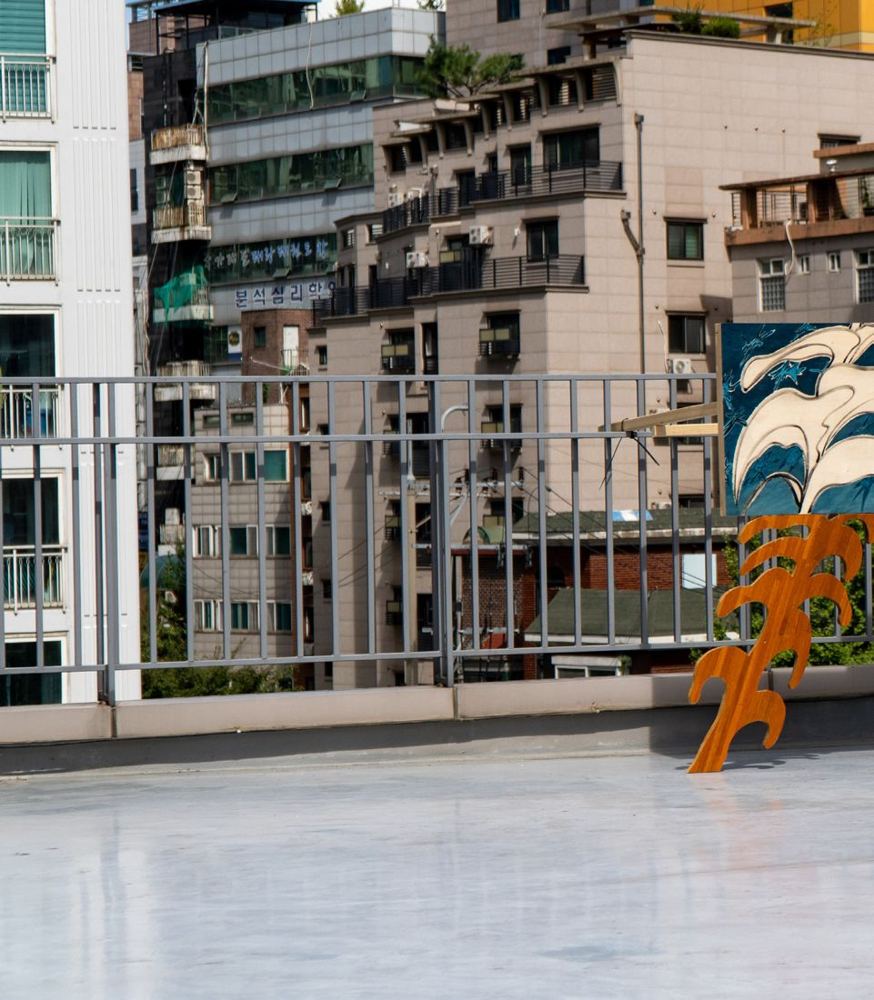
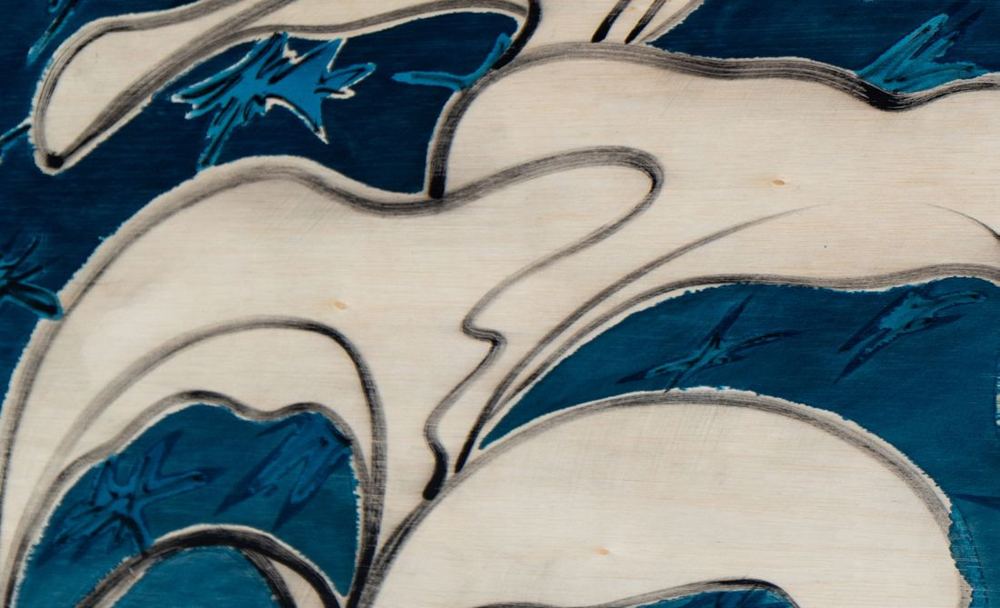
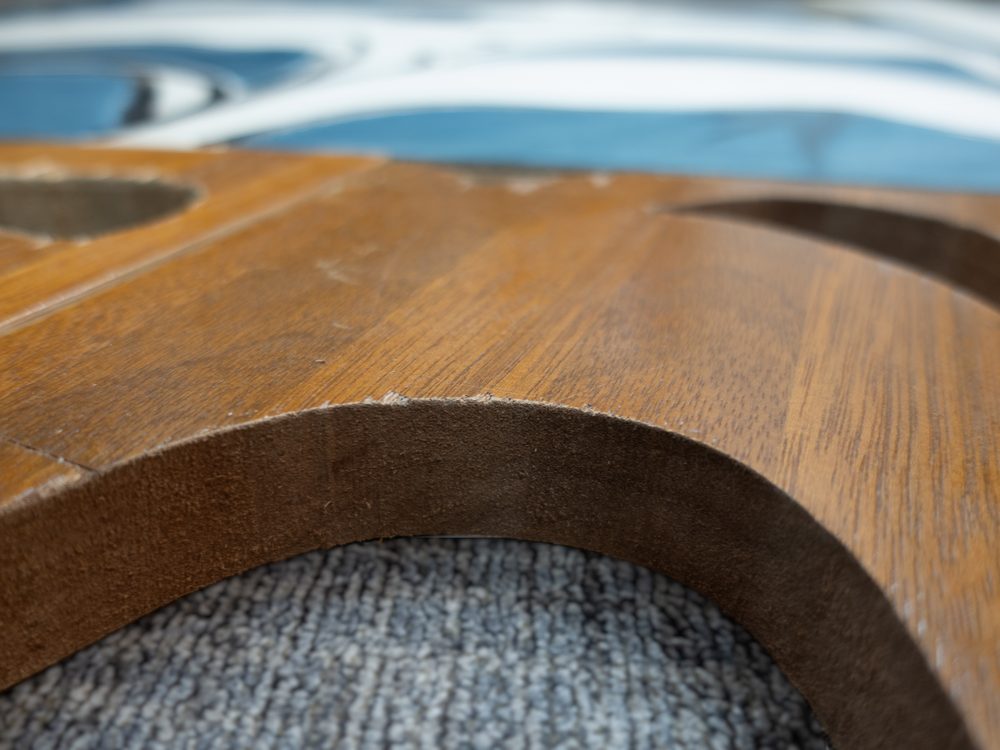
영귀미면 버스정류소에 처음 발을 내딛었을 때의 막막함은, 8년간 몽골에서 지낸 후 한국에서 살아가야 했던 순간의 감정과 흡사했다. 익숙한 환경에서 벗어나 낯선 풍경을 마주하는 일은 언제나 큰 힘을 요구한다.
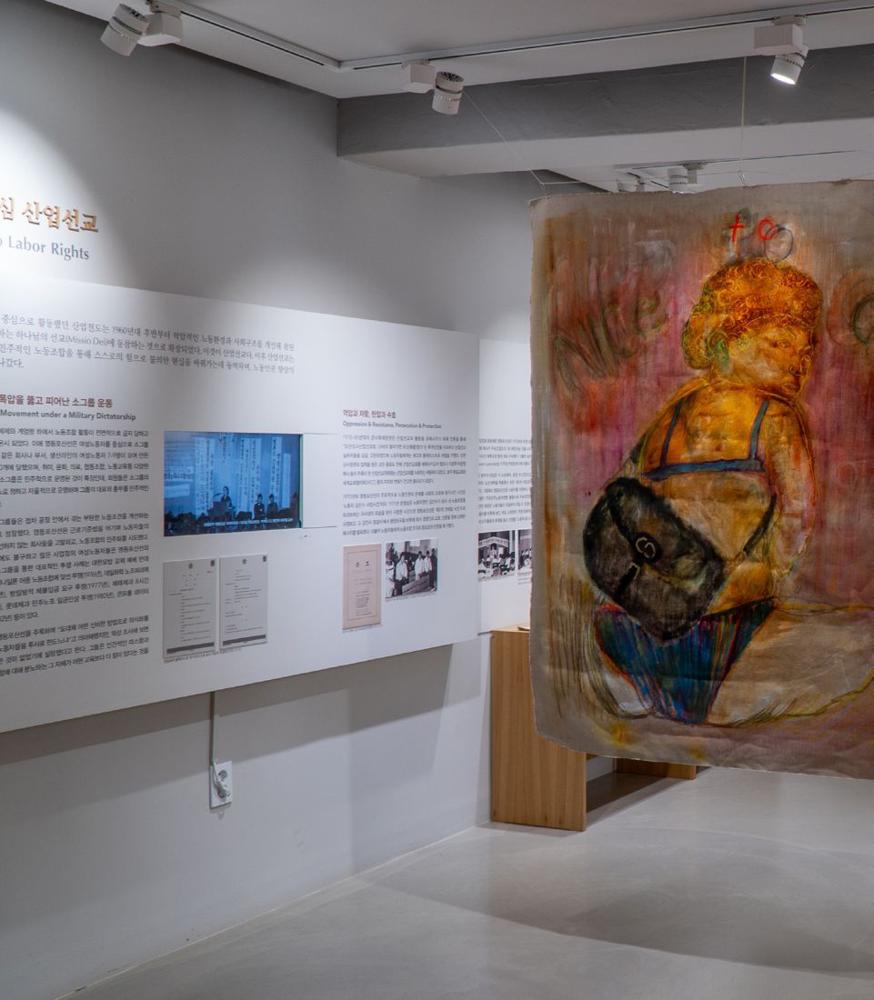
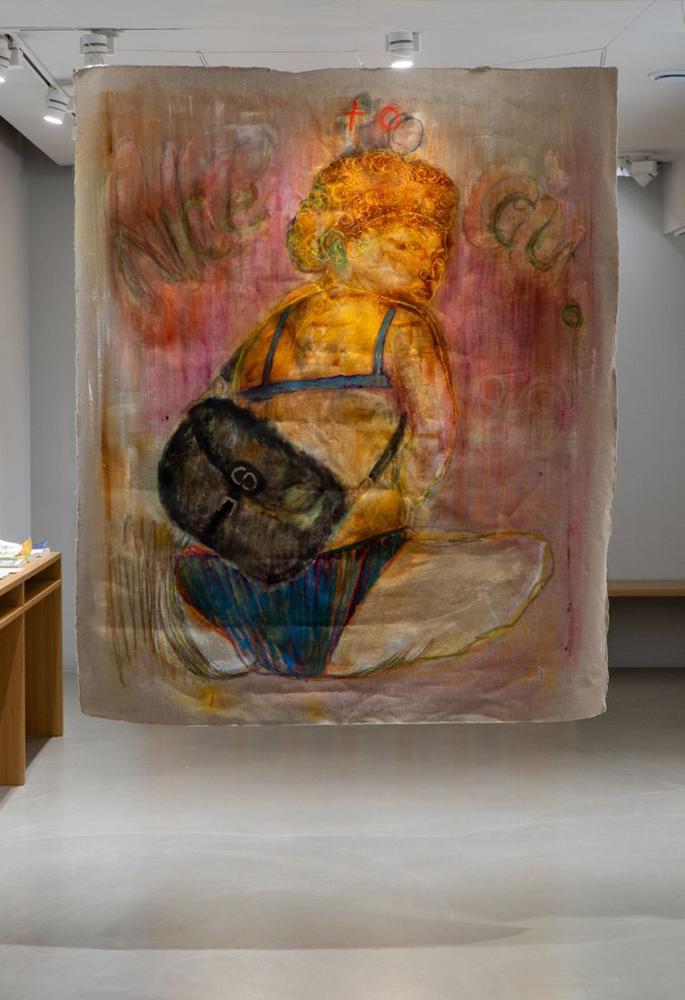
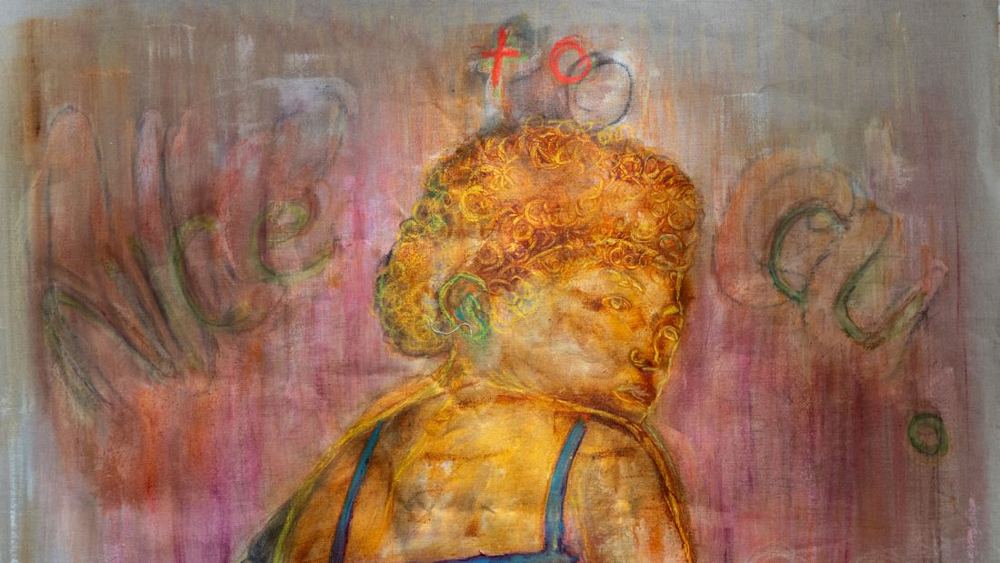
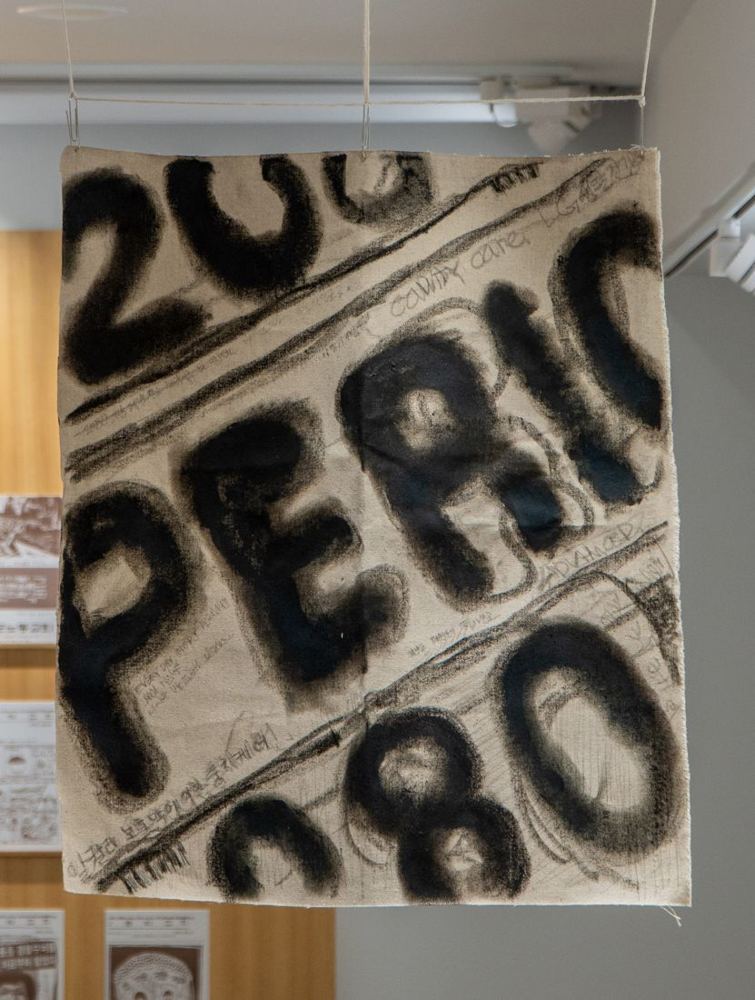
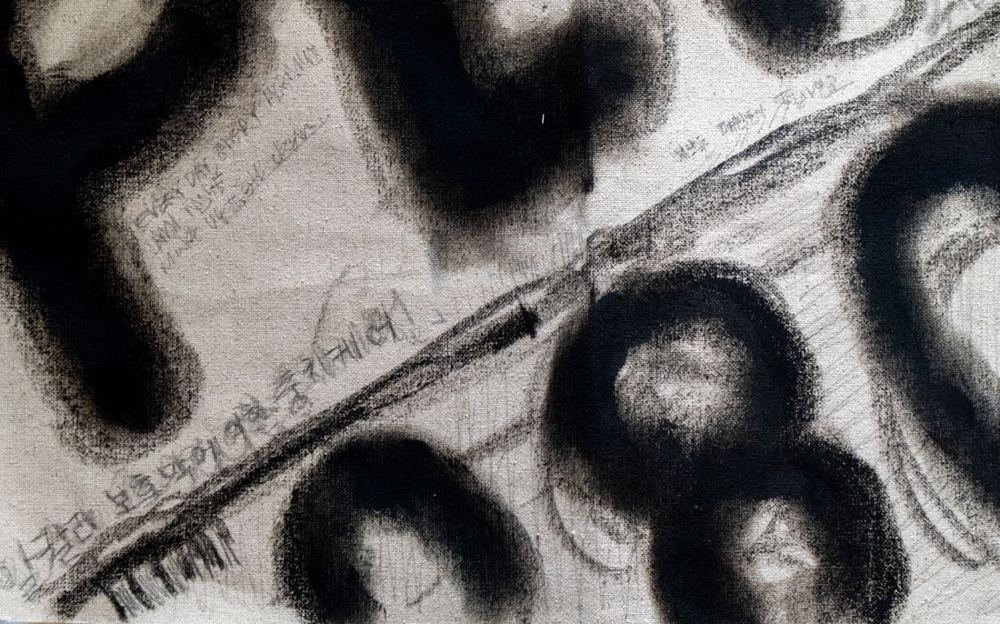
시골을 떠나 휘황찬란한 서울로 상경해 생존을 모색하던 노동자들의 몸부림은, 부당한 근로 지침에 저항하던 사회적 서사로 여실히 드러난다. 〈NICE TO CU〉라는 문구는 단순한 인사가 아니라, 도시 곳곳에 균질하게 배치된 편의점 간판처럼 일상의 구조를 반복적으로 재생산하는 기제로 작동한다.
이처럼 습관화된 언어와 행위는 우리의 몸과 사고에 스며들며, 결국 삶을 하나의 규칙적 리듬으로 조직한다. 나는 이 지점을 통해, 반복과 규율 속에서 개인이 어떻게 사회적 존재로 길들여지는지, 그리고 그 과정이 노동의 경험과 맞닿아 있음을 드러내고자 한다.
The desolation I felt stepping off at the Yeonggwimi bus stop was much like the feeling of returning to live in Korea after eight years in Mongolia. Facing an unfamiliar landscape after leaving the familiar always demands great strength.
The struggles of workers who left the countryside for the dazzling city are vividly revealed in their resistance to unjust labour directives. The phrase “NICE TO CU” is not merely a greeting: like convenience-store signs distributed evenly across the city, it works as a mechanism that reproduces the structure of daily life through repetition.
Habitual language and gesture seep into our bodies and thinking, organising life into a regular rhythm. Through this, I want to reveal how the individual is domesticated into a social being within repetition and discipline — and how that process touches the experience of labour.
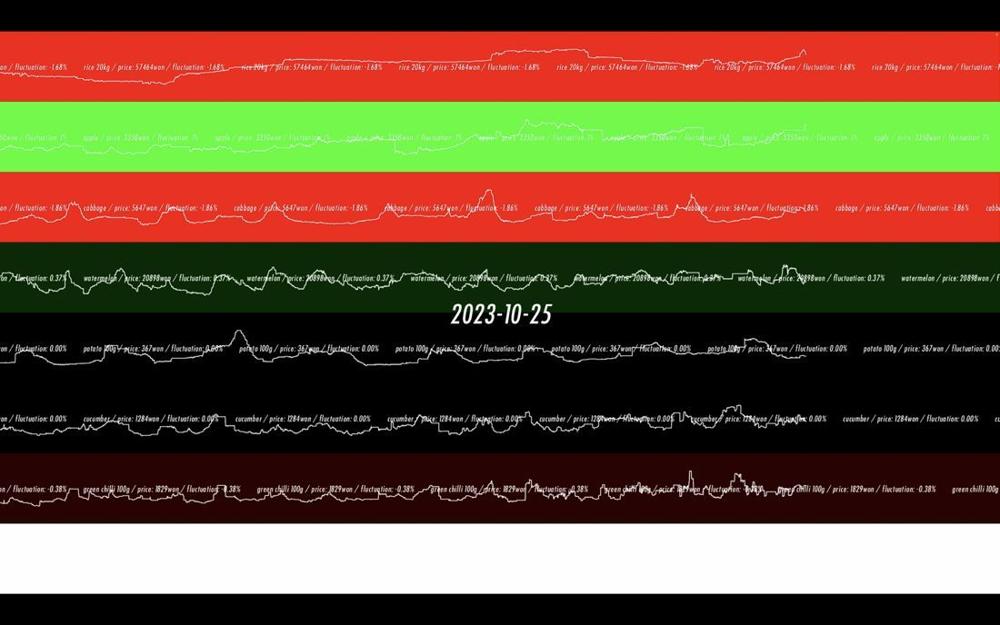
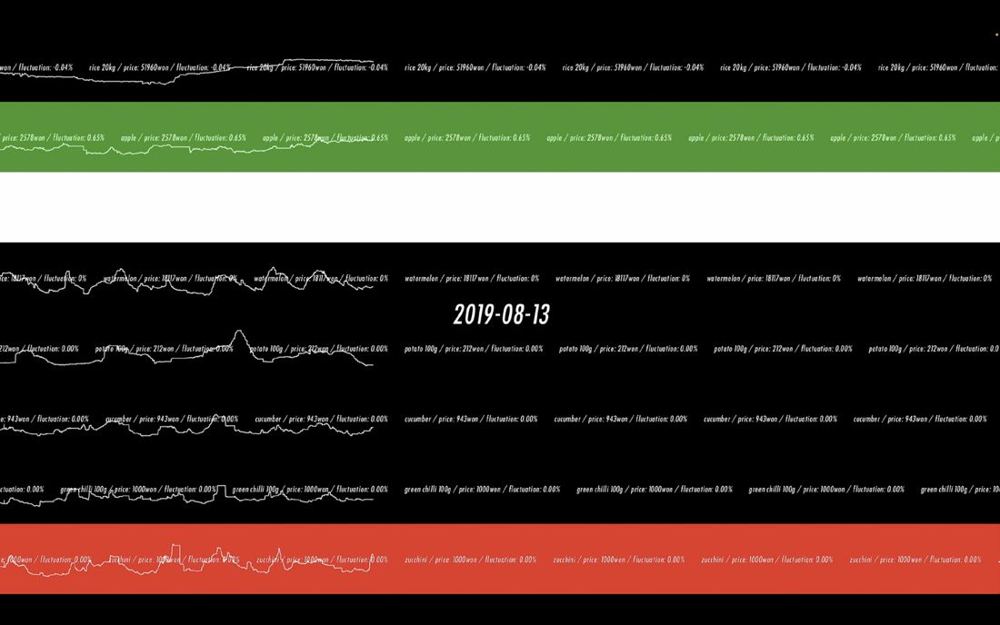
농사의 시간은 기록으로 남지 않는다. 씨를 뿌리고 기다리고 거두는 반복은 수확이라는 결과에 가려진다. <The Farming Score>는 영귀미면의 농사 데이터를 색과 소리로 옮겨, 눈에 보이지 않던 과정의 시간을 하나의 악보처럼 펼쳐놓는다.
약 두 시간에 걸쳐 흐르는 이 스코어는, 결과가 아니라 과정 자체를 듣게 한다. 관객은 데이터가 만들어내는 색 띠와 소리를 따라가며, 한 계절의 노동이 어떤 리듬으로 이루어졌는지를 감각하게 된다.
The time of farming leaves no record. Sowing, waiting and gathering are eclipsed by the harvest. <The Farming Score> translates farming data from Yeonggwimi into colour and sound, unfolding the invisible time of process like a musical score.
Running for around two hours, the score asks us to listen to process rather than result. Following the bands of colour and the sounds the data produces, the audience senses the rhythm in which a season of labour was made.
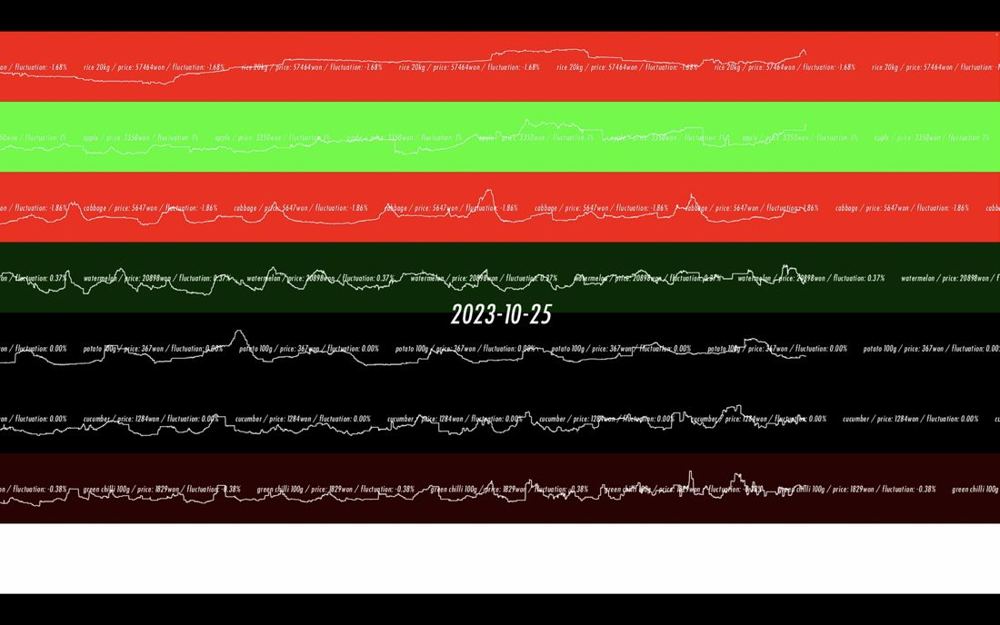
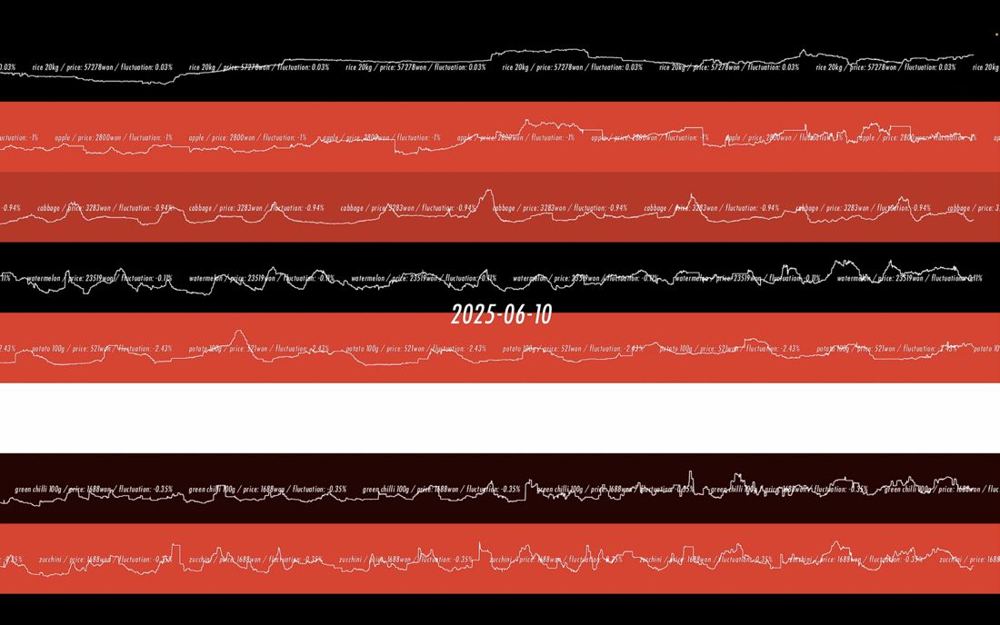
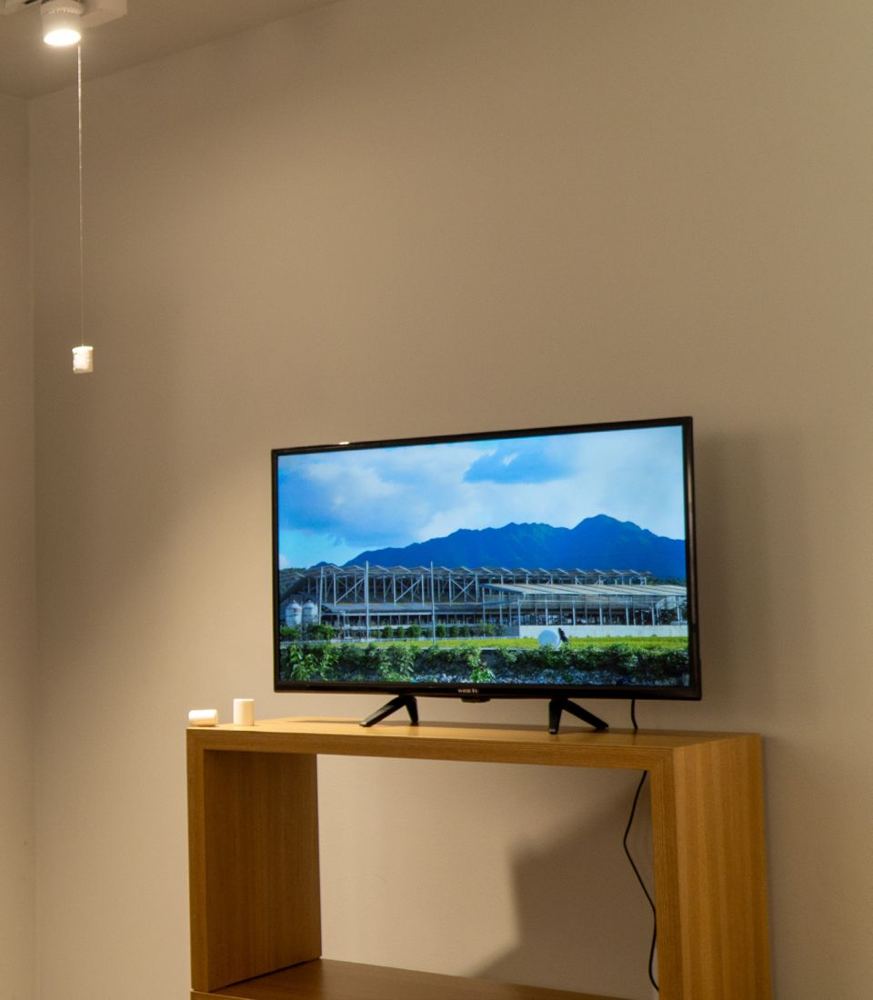
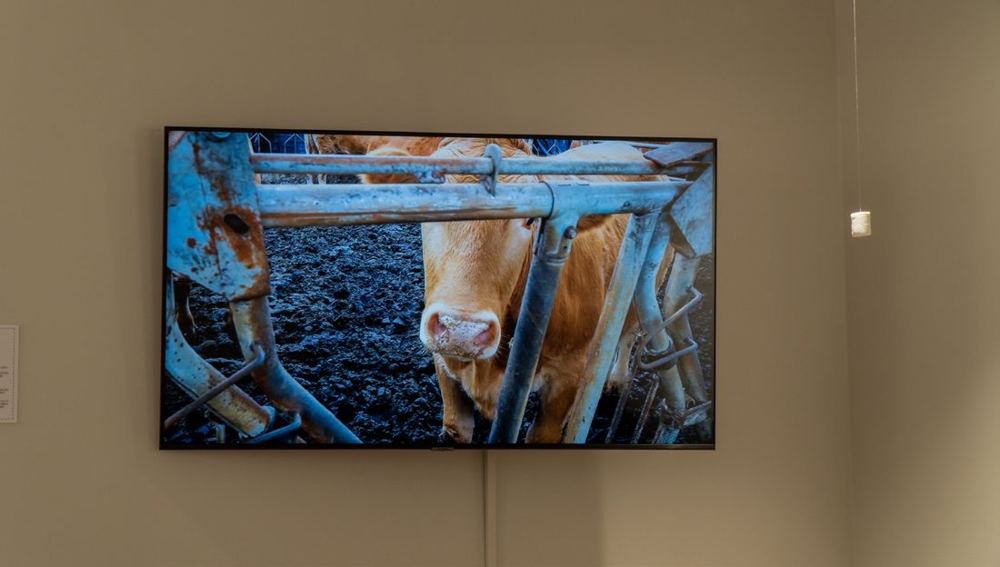
책상에 놓인 하얀 마시멜로를 바라보며 그것이 만들어지는 과정을 거슬러 올라간다. 포장지에 드러나지 않는 공간에, 드러나지 않는 존재들의 무게에 다가간다.
곤포 사일리지를 굴리는 행위는 일종의 수행과도 같다. 드러나지 않는 존재들의 무게를 보이지 않는 곳에서 굴린다. 둥글고 하얀 표면에 단절된 것들이 문질러 이어지기를 바란다.
Looking at a white marshmallow on a desk, I trace back the process that made it — approaching the space the packaging does not show, and the weight of the beings it does not reveal.
Rolling a bale of silage is a kind of performance: rolling, out of sight, the weight of what goes unseen. On that round white surface, I hope the severed things may be rubbed back together.
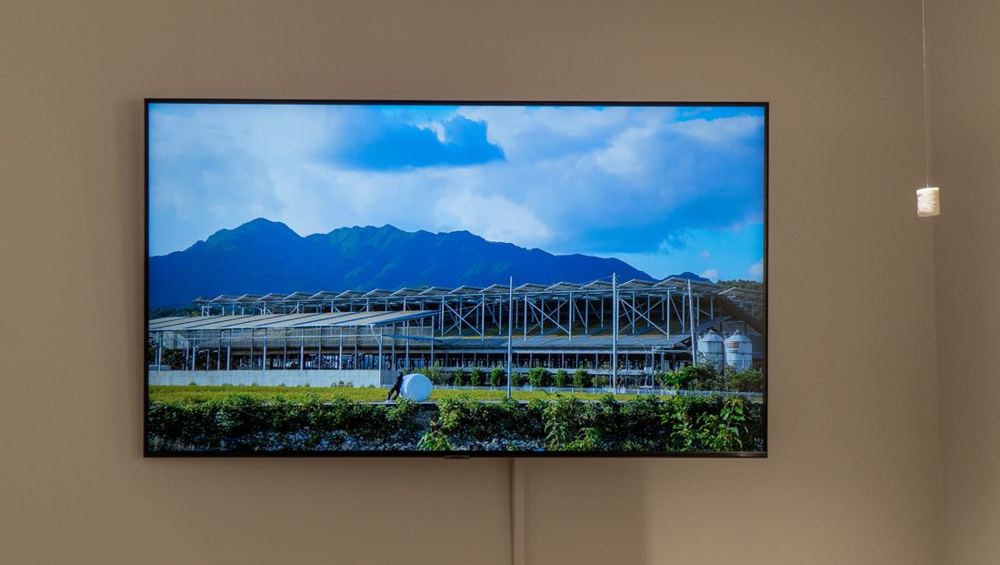
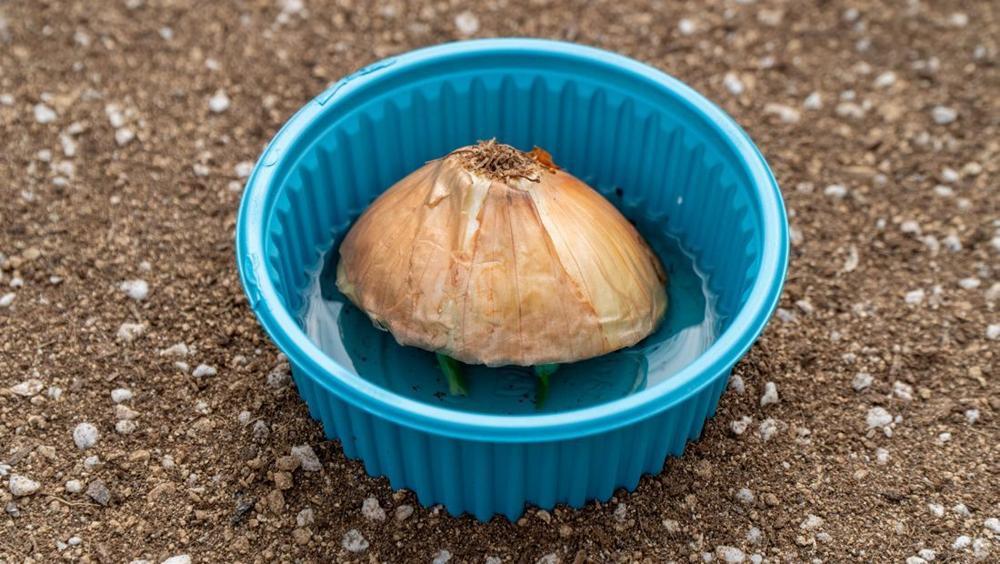
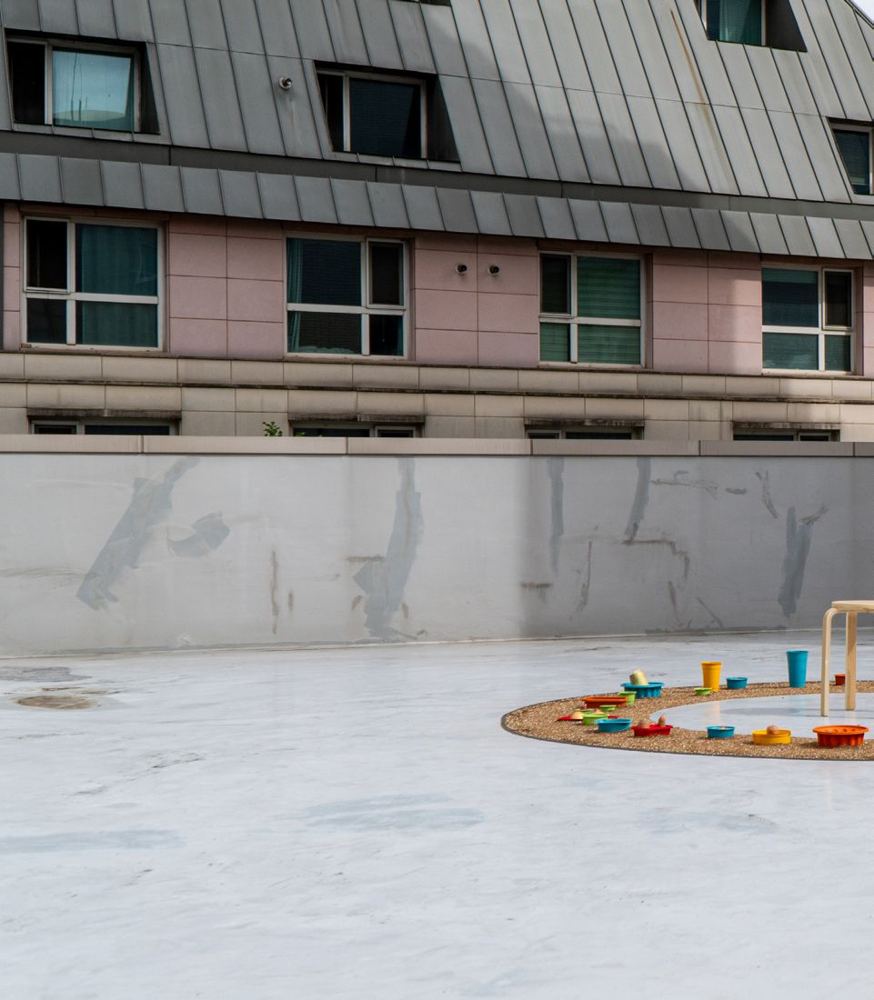
흙, 플라스틱 배달 용기, 물, 그리고 채소라는 네 가지 재료를 통해 도시와 농촌, 과정과 결과, 자연과 인공 사이의 긴장을 드러낸다. 바닥에는 흙이 깔린다. 그러나 이 흙은 더 이상 생명을 길러내지 않는다. 마치 도시의 콘크리트 바닥처럼, 자연과 단절된 흔적의 층으로만 존재한다.
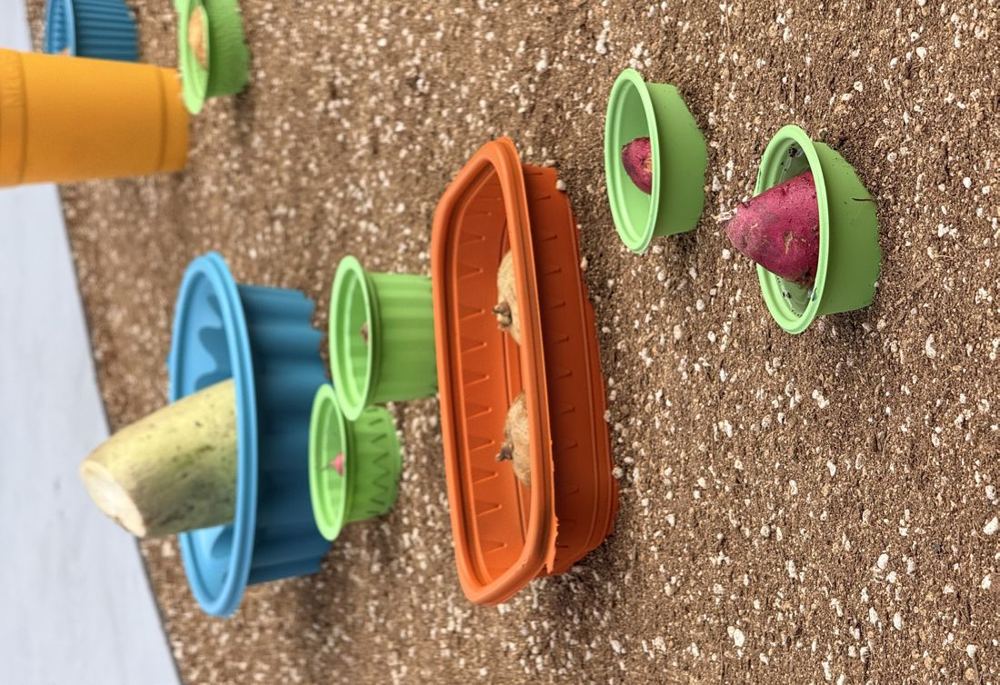
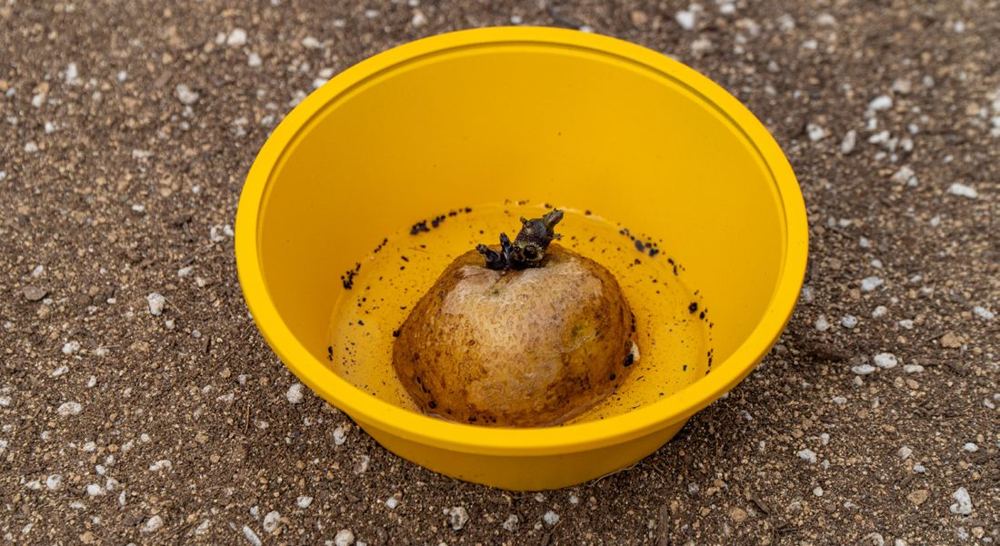
그 위에는 형형색색으로 칠해진 플라스틱 배달 용기가 놓인다. 각 용기에는 물이 채워지고, 감자·고구마·무·당근·양파 등의 채소가 반으로 잘린 채 담긴다. 본래의 불규칙성과 흙과의 관계가 지워진 이 형태들은 ‘과정이 절단된 결과’의 아이러니한 표상이다.
그러나 전시는 정지된 상태로 머물지 않는다. 시간이 흐르면서 채소들은 변색되고, 썩고, 때로는 물 위에서 잎을 틔운다. 관객은 원의 바깥에서 전경을 감상할 수도 있지만, 내부로 들어와 의자에 앉아 사방을 둘러싼 채소와 용기를 마주할 수 있다. 의자 옆 분무기로 물을 뿌려주며, 사라져가는 과정에 잠시 개입할 수 있다.
Through four materials — soil, plastic delivery containers, water and vegetables — the work reveals the tension between city and countryside, process and result, nature and the artificial. Soil is laid on the floor, but it no longer raises life. Like a city’s concrete, it exists only as a layer of trace severed from nature.
On it sit brightly painted plastic delivery containers, each filled with water and holding vegetables — potato, sweet potato, radish, carrot, onion — cut in half. Stripped of their original irregularity and their relation to soil, these forms are an ironic figure for “results with the process cut away.”
But the work does not stay still. Over time the vegetables discolour, rot, and sometimes sprout leaves on the water. Visitors may view the scene from outside the circle, or step inside and sit in the chair surrounded by containers. A spray bottle beside the chair lets anyone water them — intervening, briefly, in a process of disappearance.
우리는 결과 중심의 세상에 익숙하다. 완전무결한 형태, 뚜렷한 성과, 즉각적인 효율성 속에서 과정은 종종 지워지거나 무가치한 것으로 여겨진다. 그러나 결과는 과정이 있어야 성립하며, 과정은 결과를 통해서 비로소 의미를 가진다. 두 가지는 대립되는 것이 아니라 서로의 존재를 통해 더욱 빛을 발한다.
도시와 농촌의 삶 또한 이와 같다. 표면적으로는 전혀 다른 풍경과 리듬을 지니지만, 그 근저에는 노동과 시간이 반복되는 동일한 과정의 층위가 자리하고 있다.
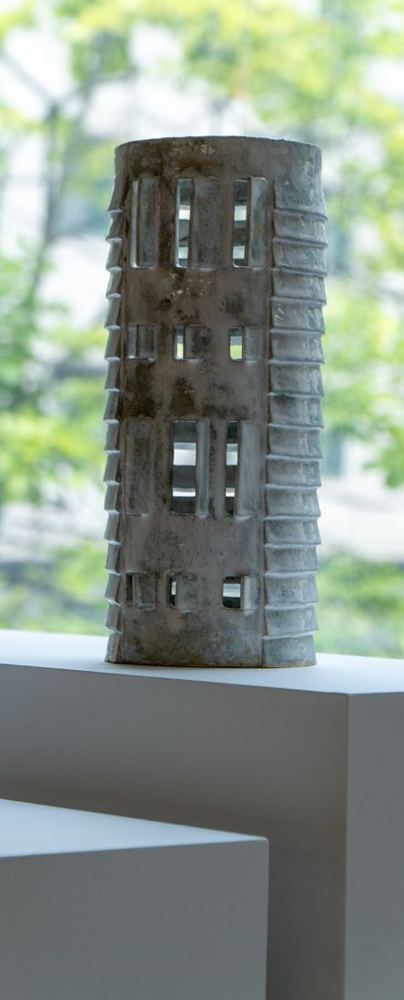
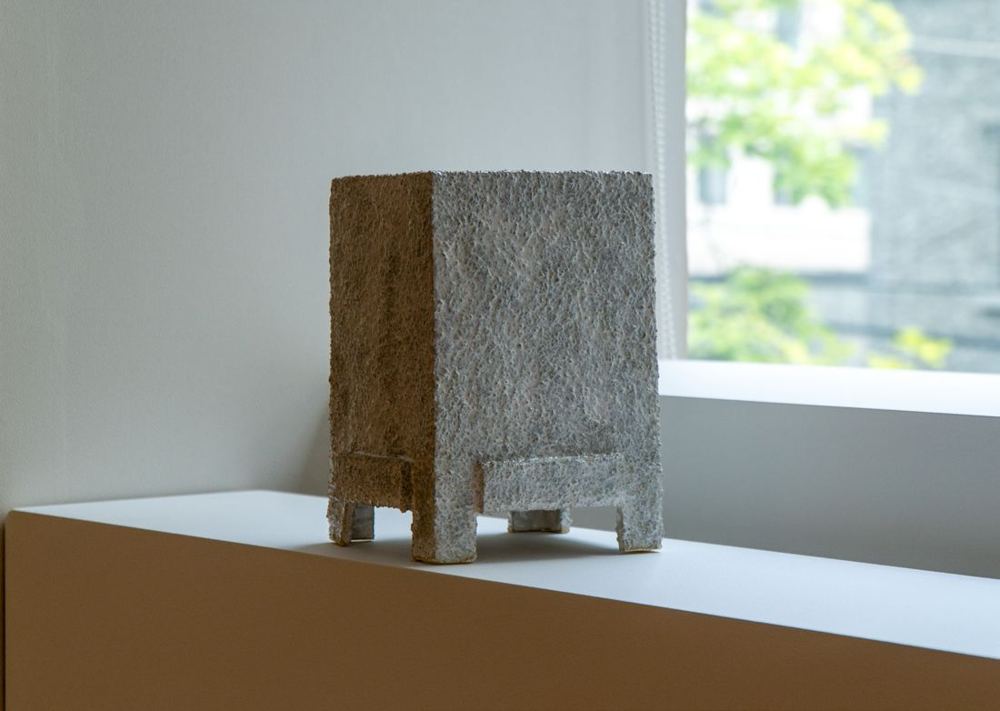
건축물을 연상시키는 형태와 창 혹은 블라인드와 같은 구조는 안과 밖을 나누는 경계의 장치다. 그러나 동시에 그것은 빛이 드나들게 하며, 닫히면서도 열리고, 나누면서도 이어주는 통로가 된다. 흔적은 단순히 사라지는 것이 아니라, 관계와 공존을 가능하게 하는 장치로 남는다.
We are accustomed to a world centred on results. Within its demand for perfect forms, clear outcomes and immediate efficiency, process is often erased or thought worthless. Yet a result only stands if there was process, and process only takes on meaning through its result. The two are not opposed; each shines through the other.
The same is true of city and country life. On the surface their landscapes and rhythms differ entirely, yet beneath them lies the same layer of process in which labour and time repeat.
Forms recalling architecture, and structures like windows or blinds, are devices of boundary between inside and outside. At once they let light pass — closing yet opening, dividing yet connecting. A trace does not simply vanish; it remains as a device that makes relationship and coexistence possible.
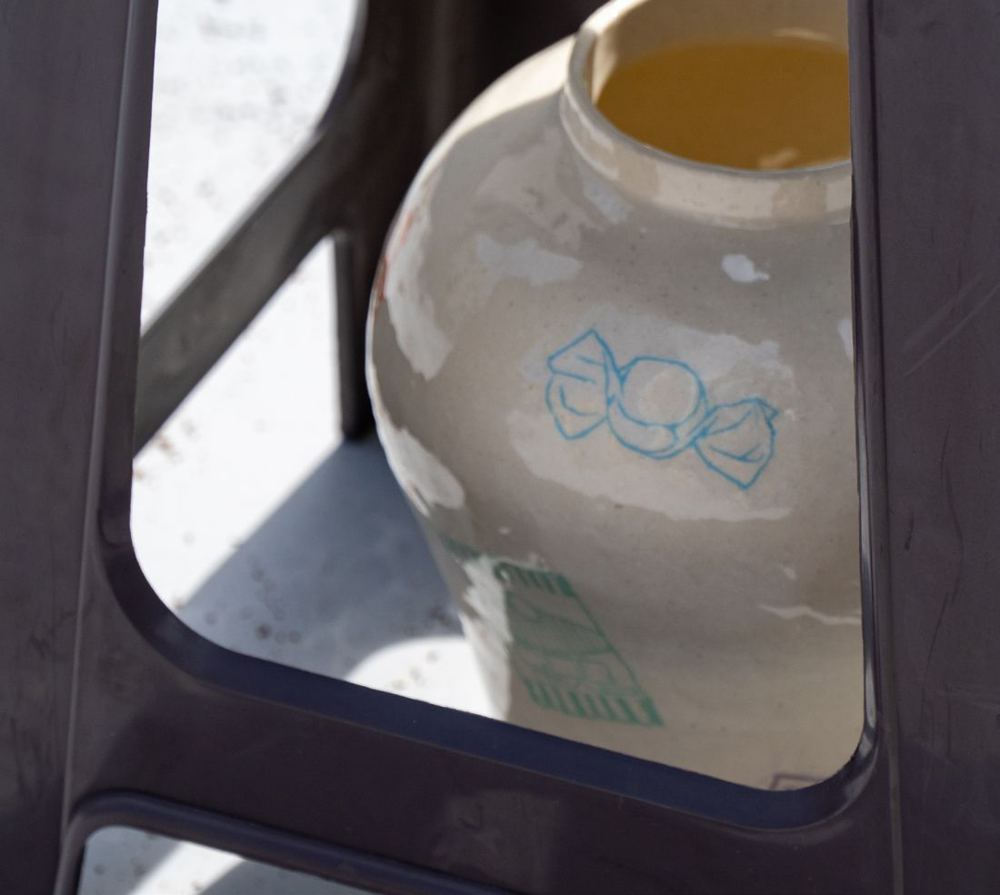
우리는 클릭 한 번으로 대부분의 것들을 집 앞에 놓을 수 있다. 특히 배달·배송 시장의 확대로, 기업들은 당일배송, 총알배송, 새벽배송 등의 문구를 전면에 내세워 그들의 ‘빠름’을 강조한다. 이러한 소비에 익숙해지는 것은 상품들이 어디에서 생산되어 누구를 통해 우리에게 오는가에 대한 감각을 무디게 만든다.
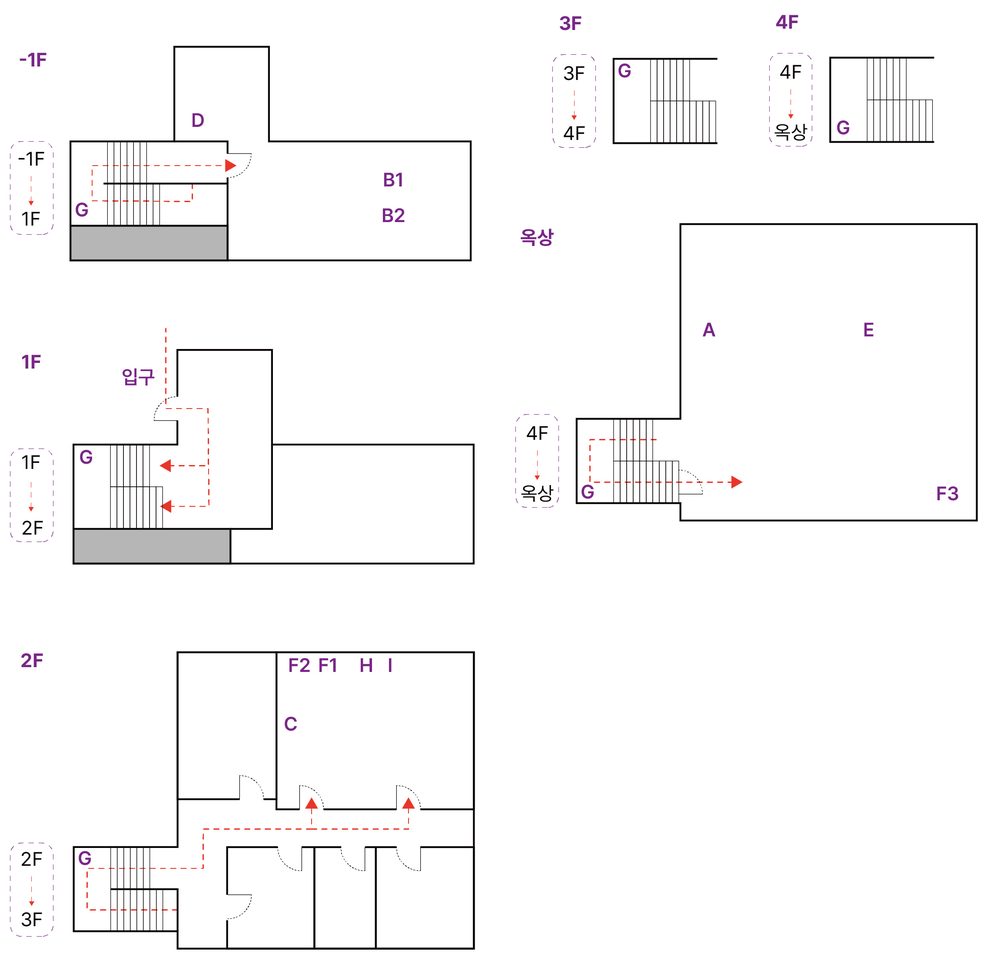
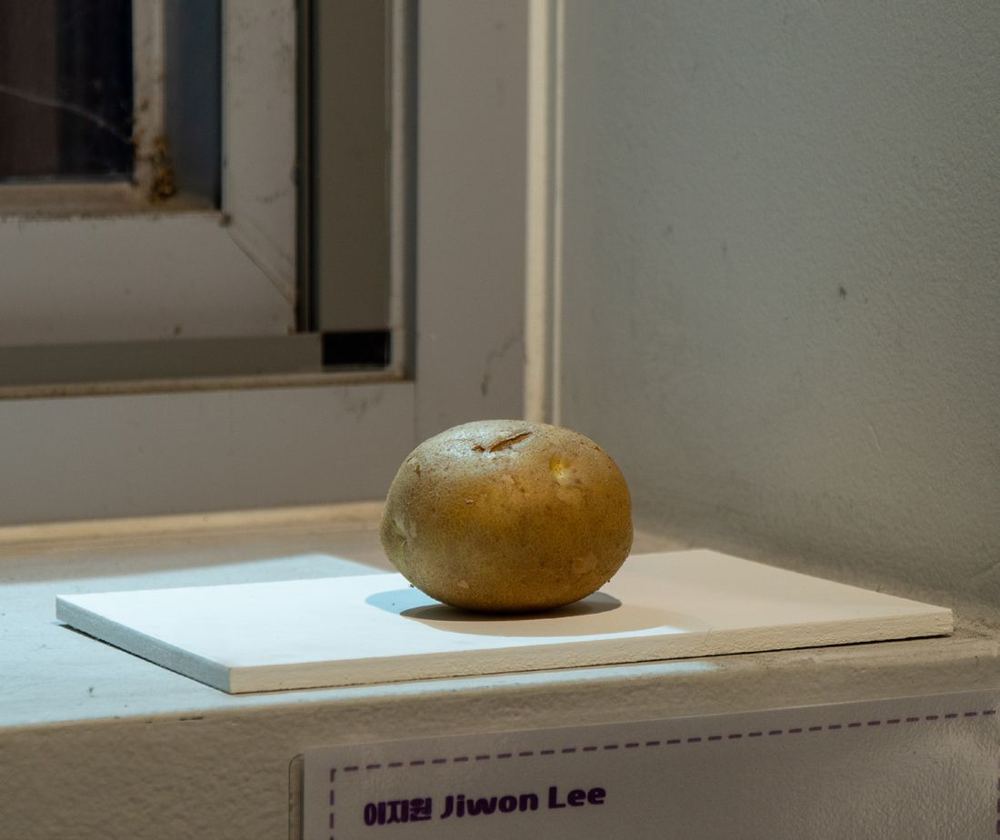
<감자(감자)>는 납작하게 접혀버린 과정들을 펼쳐보고자 하는 시도다. 그 어떤 것도 하늘에서 뚝 떨어지지 않는다. 나는 이 ‘과정들’을 ‘계단 오르기’로, ‘상품이 되기 전의 것’은 ‘감자’로, ‘상품’은 ‘제작한 감자 조각’으로 대치하여 우리가 놓치는 노동들을 되짚어본다.
각 층의 계단에 놓여 있는 작업들은 계단을 오르내리며 전체를 볼 수 있다. 모든 과정은 층별로 단절된 것처럼 보이지만, 하나로 연결되어 있음을 알 수 있다. 계단을 오르듯, 자신의 속도를 지각하고 우리가 잊어버린 과정들을 펼쳐보길 바란다.
One click and almost anything lands at our door. With the expansion of delivery markets, companies foreground their speed — same-day, rocket, dawn delivery. Growing used to this form of consumption dulls our sense of where goods are produced and through whom they reach us.
The work is an attempt to unfold processes that have been folded flat. Nothing simply falls from the sky. I replace “process” with the act of climbing stairs, “the thing before it is a commodity” with the potato, and “the commodity” with a fabricated potato piece — retracing the labour we miss.
The works placed on each landing can be seen as a whole by walking up and down. Each stage looks severed from the next, yet they are connected as one flow. Like climbing stairs, I hope you notice your own pace, and unfold the processes we have forgotten.
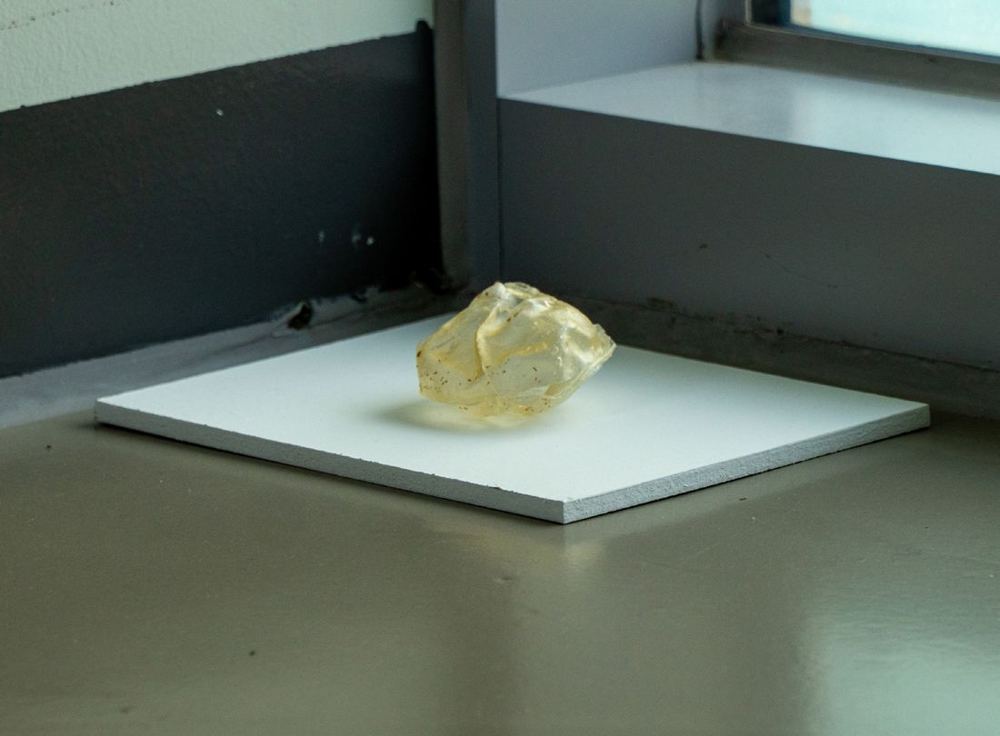
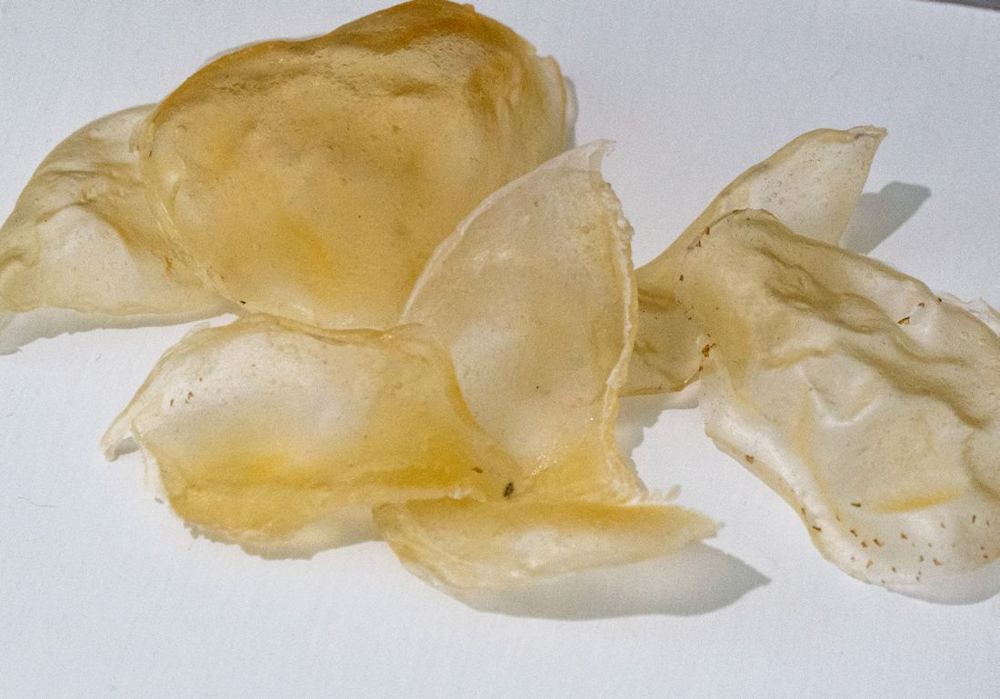
이주가 완성되기 전 (협력 기획 박윤아) — 영귀미면으로 이주해 온 사람들의 ‘이주가 완성되기 전’의 시간을 들여다보는 프로그램. 한 사람이 새로운 지역에 도착해 그곳의 사람이 되어가는 과정은 결코 한순간에 끝나지 않는다. 그 미완의 시간을 기록하고 나눈다.
Before Migration Is Complete (collaborating curator Yoonah Park) — a programme looking into the time “before migration is complete” for those who have moved to Yeonggwimi-myeon. Arriving in a new place and becoming one of its people is never finished in a moment; the programme records and shares that unfinished time.
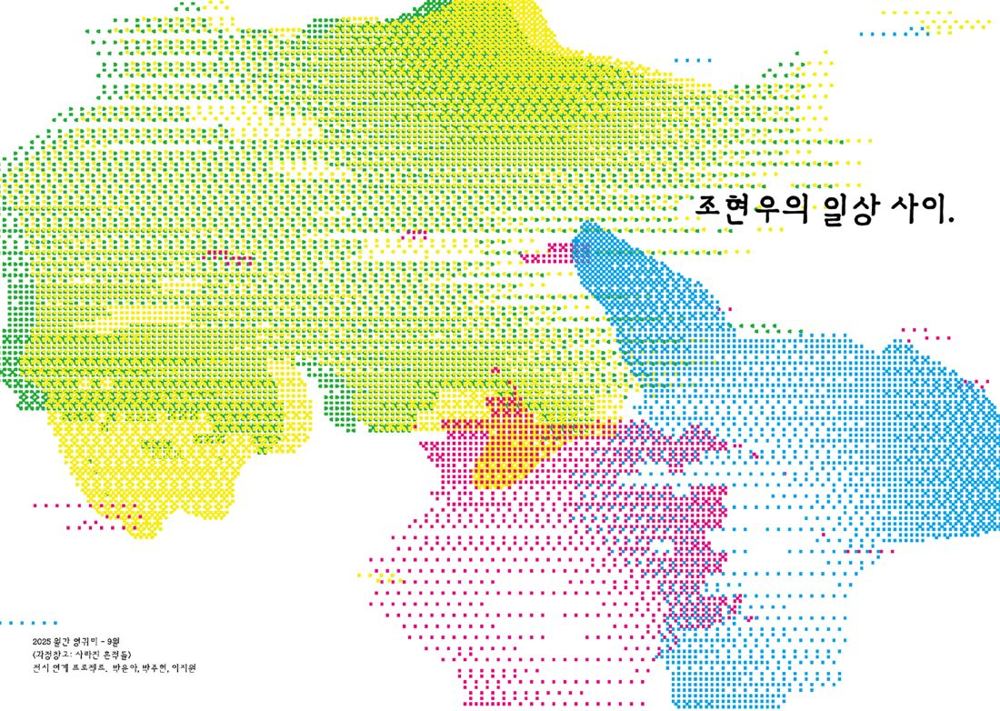
영귀미 캡슐 (기획 장민정) — 영귀미면의 지금을 담아 미래로 보내는 타임캡슐 형식의 프로그램. 주민과 관람객이 남긴 기록이 하나의 캡슐로 모여, ‘2025년의 영귀미’를 훗날 다시 열어볼 수 있는 형태로 저장된다.
Yeonggwimi Capsule (curated by Minjung Jang) — a time-capsule programme sending the present of Yeonggwimi into the future. Records left by residents and visitors are gathered into a single capsule, storing “Yeonggwimi in 2025” in a form that can be opened again later.