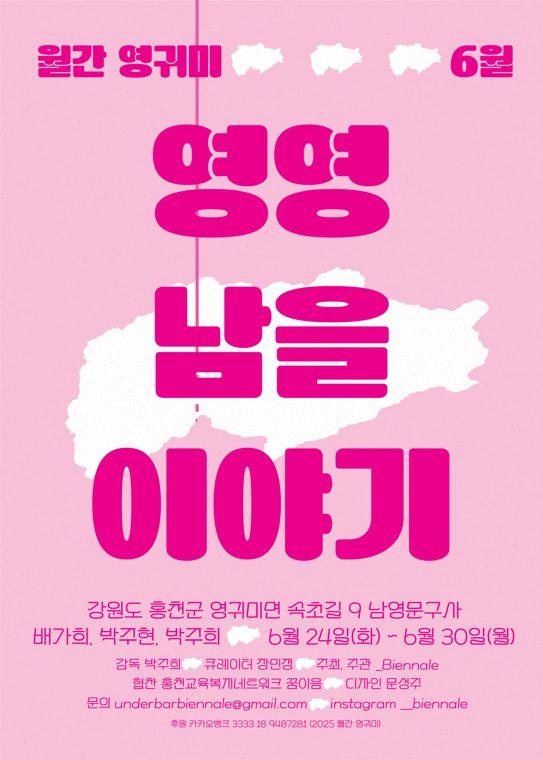
June · 6월
영영
남을
이야기Young Forever
A Story of Namyoung
남을
이야기Young Forever
A Story of Namyoung
예술감독 박주희Art Director, Joohee Park
한때 동네의 중심에는 문방구가 있었다. 그곳은 단지 물건을 사는 장소가 아니라, 놀이와 수다, 작당과 도둑질(!), 불량식품과 눈치, 친구들과 어울림이 얽힌 작은 세계였다. 하지만 지금은 ‘빠른 배송의 시대’, ‘안전의 시대’가 되었다. 아이들은 집에 있고, 놀이터는 정비되었고, 불량식품은 사라졌다.
그렇게 문방구는 이전의 기능과 즐거움까지 잃고, 점차 기억 속으로만 남게 되었다. 그럼에도 불구하고, 남영문구사는 1989년 12월부터 지금까지 여전히 문을 열고 있다. 더 이상 분주하지 않지만, 그 자리에 ‘가만히’, 하지만 불을 켜고 머무르는 이 공간은 우리에게 묻는다. “무엇이 우리 안에 영영 남아 있을까?” “그 시절의 기억과 장면들은 사라졌을까?”
‘영영’이라는 말은 ‘영원히’, ‘오래도록’이라는 시간성을 가진다. 동시에 반복적인 소리를 가지고 있는 이 단어는 어린 시절의 말장난 같기도 하다. 전시의 또 다른 배경이 되는 ‘영귀미면’의 ‘영(詠, 노래하다)’과도 겹쳐지면서, ‘영영’은 단순한 시간 개념을 넘어 정서적 반복과 회상을 의미하고, 나아가서는 지역과도 연결된다.
‘남을 이야기’ 역시 두 가지 뜻을 담는다. 하나는 남영문구사에서의 이야기, 이 장소에 실제로 머물러 있었고 여전히 머물고 있는 이야기다. 다른 하나는 문구점이라는 장소에서 각자의 기억 속에 남는 이야기, 시간이 지나도 쉽게 사라지지 않는 감정과 장면에 대한 이야기다. 전시는 ‘사라졌지만 완전히 사라지지 않은 장소’에 대한 질문을 던진다.
There was a time when the stationery store was at the center of the neighborhood. It was more than a place to buy things — it was a small world full of games, chatting, silly plans (and even a bit of stealing!), cheap snacks and time with friends. But now we live in an age of fast delivery and safety: children stay indoors, playgrounds have been tidied up, the cheap snacks are gone.
The stationery store lost its function and its pleasures, and slowly survived only in memory. And yet Namyoung Stationery has kept its lights on since December 1989. No longer busy, it simply stays — and in staying it asks: what remains in us, forever? Have the memories and scenes of that time really disappeared?
In Korean, yeongyeong (“forever”) carries a sense of endless time and, in its repeated sound, the ring of a childhood word game. It also echoes the yeong (詠, “to sing”) of Yeonggwimi — so the word points beyond time toward emotional repetition, recollection, and the place itself.
The title’s “story of Namyoung” doubles too. One is the story of the shop itself — what actually stayed there, and stays still. The other is the story each of us keeps from such a place: the feelings and scenes that do not fade with time. The exhibition asks about a place that has disappeared without entirely disappearing.
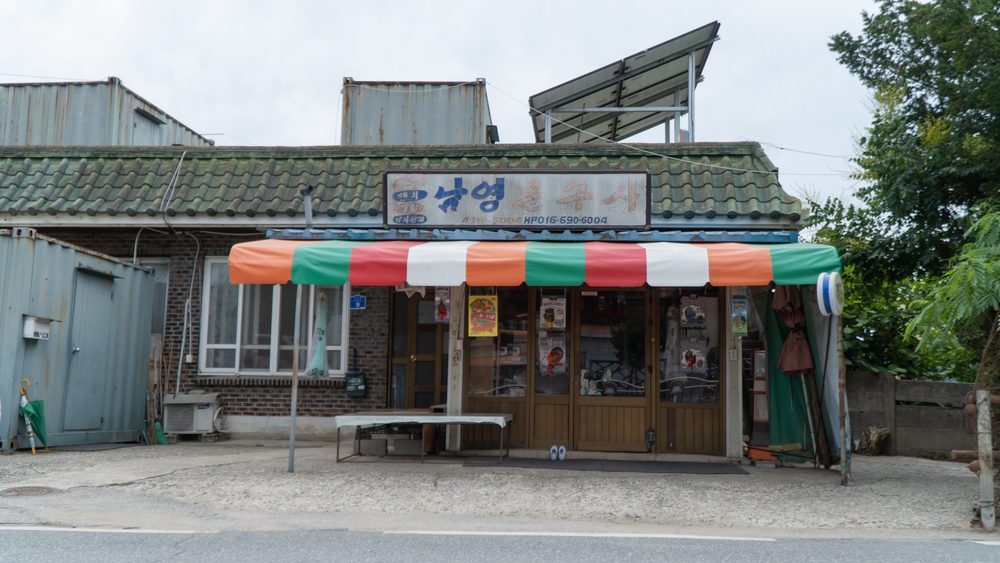
남영문구사는 오늘도 불을 켜고 자리를 지키고 있다. 속초초등학교 앞, 1989년 12월에 이사를 온 한 부부는 문구점을 열었다. 남편의 이름에서 ‘남’, 아내의 이름에서 ‘영’을 따와 가게의 이름은 “남영문구사”가 되었다.
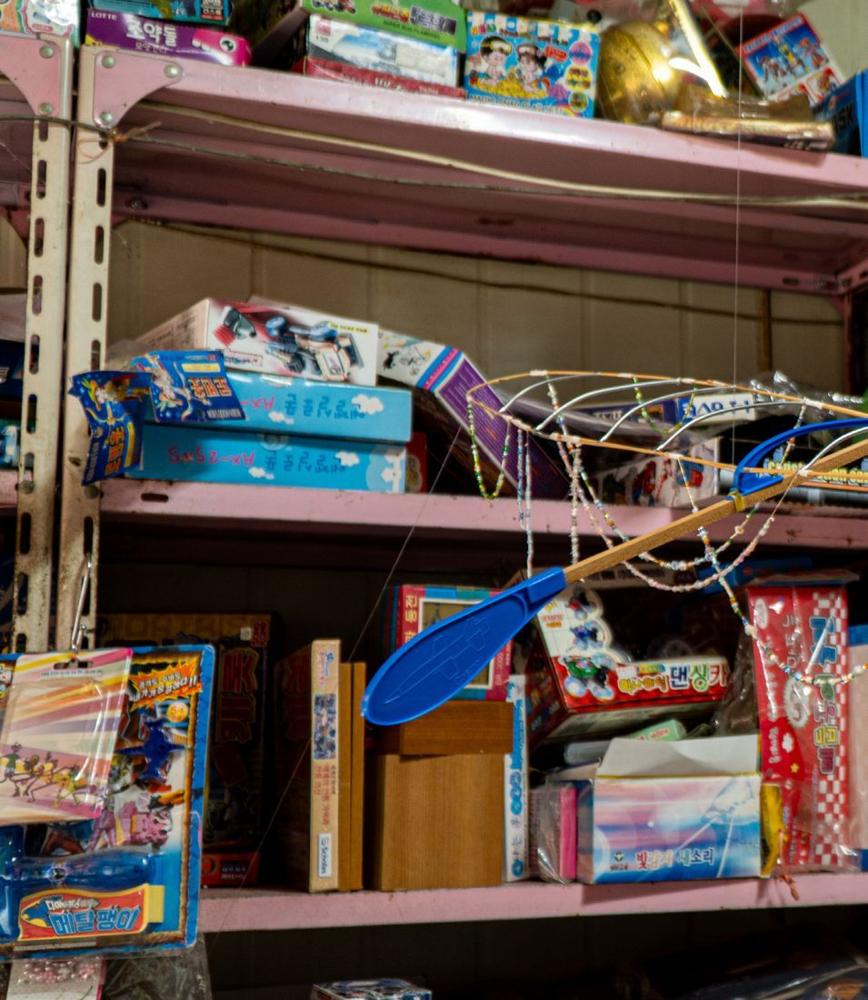
이곳은 참 신기한 문방구다. 물건이 수북이 쌓여 있어 처음 온 손님은 원하는 물건을 찾기조차 어렵다. 마치 해리포터에 나오는 움직이는 계단처럼, 문방구 속 물건들이 스스로 자리를 옮기는 듯한 느낌마저 든다. 하지만 이 혼돈의 질서를 완벽하게 꿰뚫고 있는 단 한 사람이 있다. 바로 남영문구사의 ‘영’을 담당하고 있는 사장님이다.
“사장님~ 메모장 어디 있어요?” 사장님은 잠시 생각을 멈추고는, 망설임 하나 없이 물건들 사이로 손을 넣어 정확히 찾아낸다. 간식들 사이에서 공책이나 멜로디언이 나오기도 하고, 반대로 수첩과 메모장 사이에서 간식이 나오기도 한다.
이곳은 특히 초등학생들에게는 일종의 아지트였다. 학교가 끝난 아이들은 문구점에 들러 컵라면 하나를 산다. 그러면 아주머니가 문구점 안쪽으로 연결된 집으로 데려가 주전자에 물을 끓여 주셨다. 나무로 된 둥근 상을 펴고, 종지에 담은 김치를 함께 내준다. 가끔은 기다리는 줄이 생길 정도로 붐비기도 했다. 그곳은 그야말로 어린이들의 사랑방이었다.
1990년대부터 2025년까지 차곡차곡 쌓인 물건들은 그 자체로 “기억의 저장고”가 되었다. 물가는 오르고 세월은 바뀌었지만, 그 시절의 물건들은 여전히 그 시절의 가격표를 달고 남아 있다. 이십여 년 전과 똑같은 차임벨 소리가 울리면, 오늘도 남영문구사는 문을 연다.
Namyoung Mungusa still keeps its lights on. In December 1989 a couple moved to the small neighborhood in front of Sokcho Elementary School and opened a stationery store. Taking one syllable from the husband’s name (Nam) and one from the wife’s (Young), they called it “Namyoung Mungusa.”
It is a curious shop. Goods are piled so high that a first-time visitor can hardly find what they came for. Like the moving staircases in Harry Potter, the objects almost seem to change places on their own. Yet one person sees perfectly through this chaotic order — the owner, the “Young” of Namyoung.
“Where are the notepads?” She pauses for a moment, then reaches in without hesitation and pulls out exactly the right thing. A notebook or a melodica emerges from among the snacks; snacks emerge from between the notebooks.
For the elementary school children it was a kind of hideout. After school they would buy a cup of instant noodles, and the owner would take them through to the house behind the shop and boil water. She unfolded a round wooden table and served kimchi in a small dish. Sometimes there was even a queue. It was, in every sense, the children’s parlour.
The goods stacked up from the 1990s to 2025 have become a storehouse of memory in themselves. Prices rose and the years turned, but those objects still carry the price tags of their time. When the same chime rings as it did twenty years ago, Namyoung Mungusa opens once more.
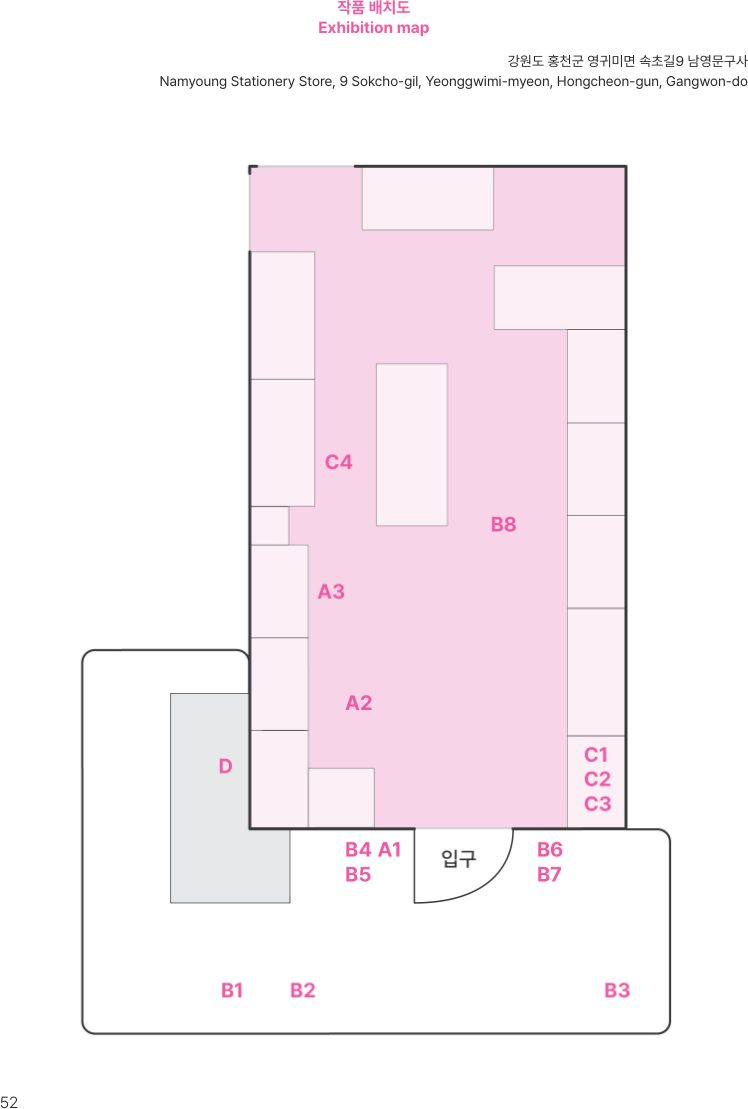
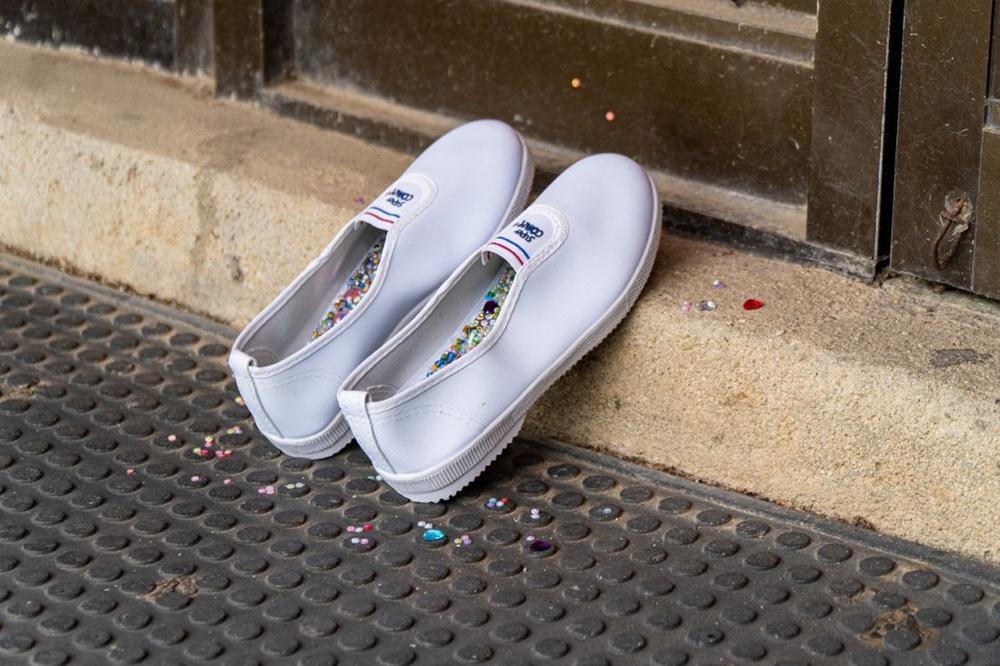
나는 어린 시절, 작고 반짝이는 것들을 모으면서 무엇이든 될 수 있는 미래를 그려보곤 했다. 그때의 문방구는 물건을 사는 공간 이상이었다. 오백 원짜리 아이스크림을 사 들고 문방구를 나오던 길, 물렁하게 닳은 실내화를 신고 뛰던 운동장, 나무 바닥에서 굴러가던 공기알들.
흐릿해진 기억이지만 그때의 감각은 여전히 내 안에서 사라지지 않고 남아 있다. 전시가 열리는 이 오래된 문방구는 내가 어릴 적 만들었던 스티커북을 펼쳐보는 것 같다. 조금씩 사 모아 붙여 두었던 스티커처럼 과거의 물건과 추억을 다시 들여다본다.
이번 전시는, 더 이상 작동하지 않지만 여전히 의미를 품고 있는 물건을 통해 과거의 감정과 감각을 다시 살펴보는 과정이다. 잊힌 것들 위에 다시 무언가를 붙이는 일은 지금의 내가 세상과 관계를 맺는 방식이다.
As a child I used to collect small, shiny things and imagine a future in which I could become anything. Back then the stationery store was more than a place to buy things: the walk out of the shop with a 500-won ice cream, the playground crossed in worn-soft indoor slippers, jacks rolling across a wooden floor.
The memories have faded, but the sensations still linger. This old shop feels like opening the sticker book I once made — and, like the stickers I collected and pasted one by one, I look again at old objects and memories.
The work is a process of revisiting past emotions through objects that no longer function but still carry meaning. Attaching something anew onto what has been forgotten has become the way I relate to the world today.
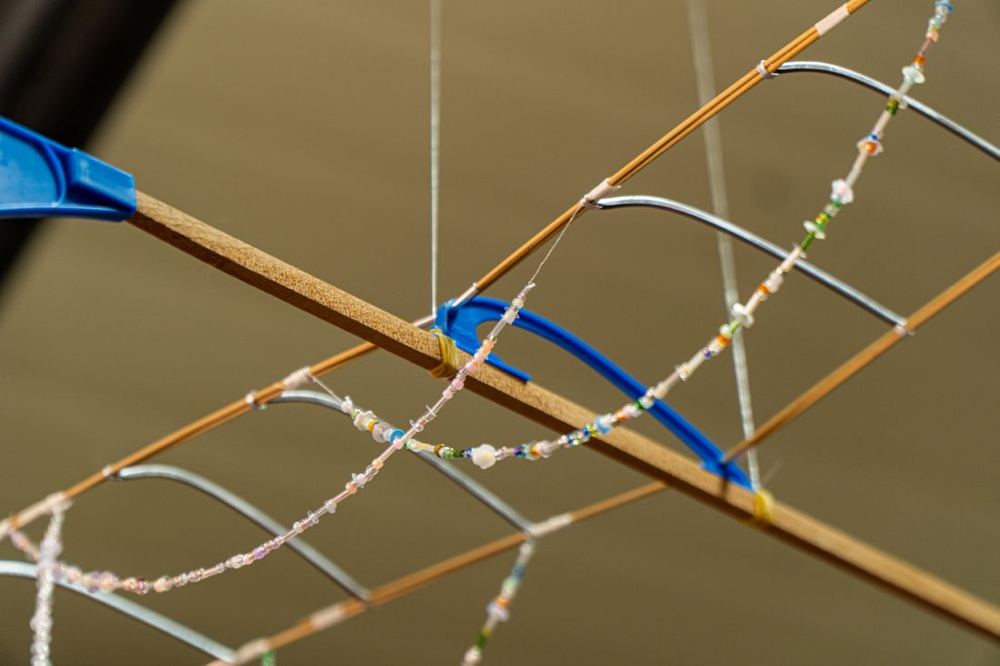
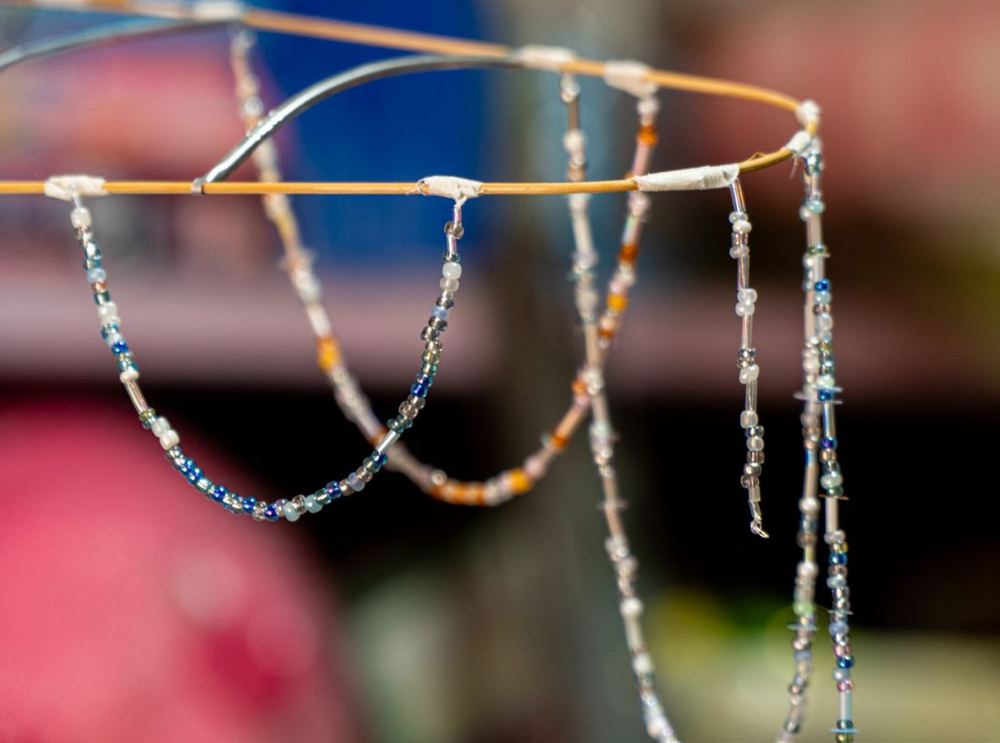
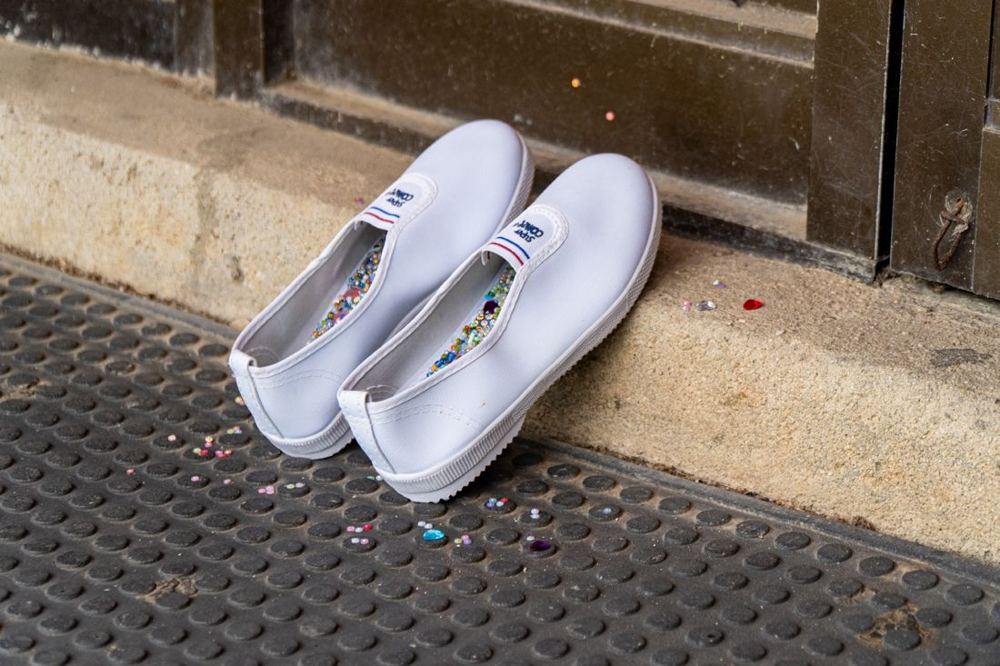
1993년생인 나는 속초초등학교를 다니던 시절, 누나와 함께 하교한 뒤 남영문구사에 들러 컵라면을 먹고, 친구들과 뽑기나 불량식품을 사먹으며 하루를 마무리하곤 했다. 그 시절 문방구는 단순한 소비 공간이 아니었다. 아이들에게는 놀이와 수다, 은밀한 공모와 작당이 이루어지던 아지트이자 일상의 놀이터였다.
하지만 지금의 남영문구사는 더 이상 아이들이 드나들지 않는, 기능은 멈췄지만 완전히 꺼지지 않은 채 남겨진 장소가 되었다. 보건과 안전을 위한 법적 규제의 변화는 학교 주변에서 불량식품과 위험 요소들을 제거했고, 동시에 아이들의 일탈과 모험, 아슬아슬한 즐거움의 공간도 함께 사라지게 했다.
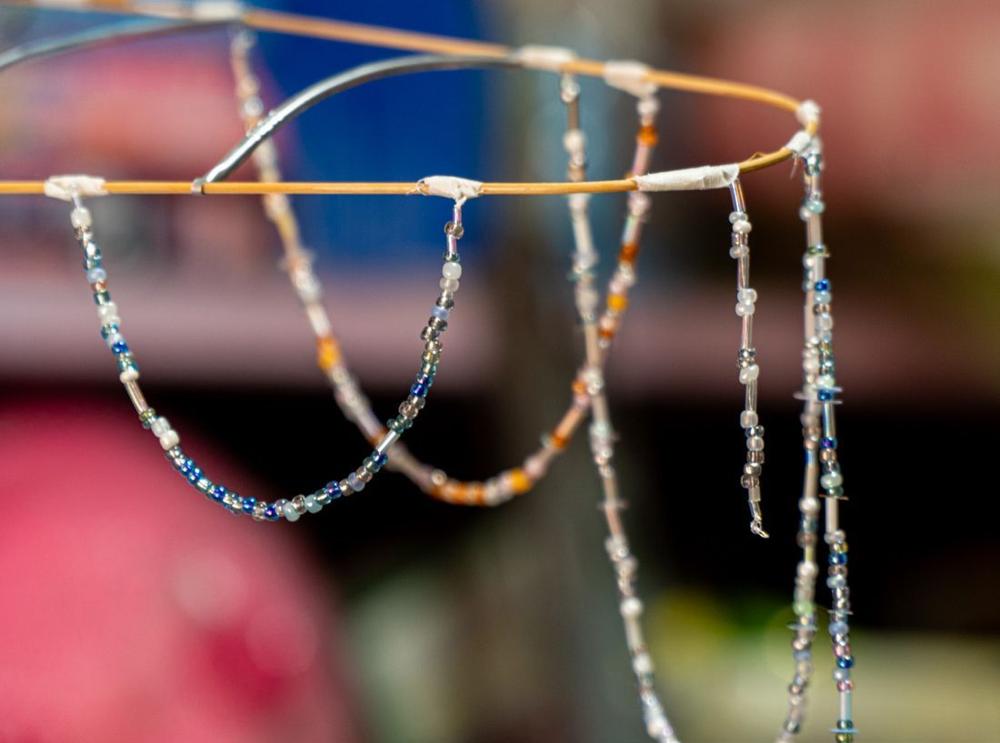
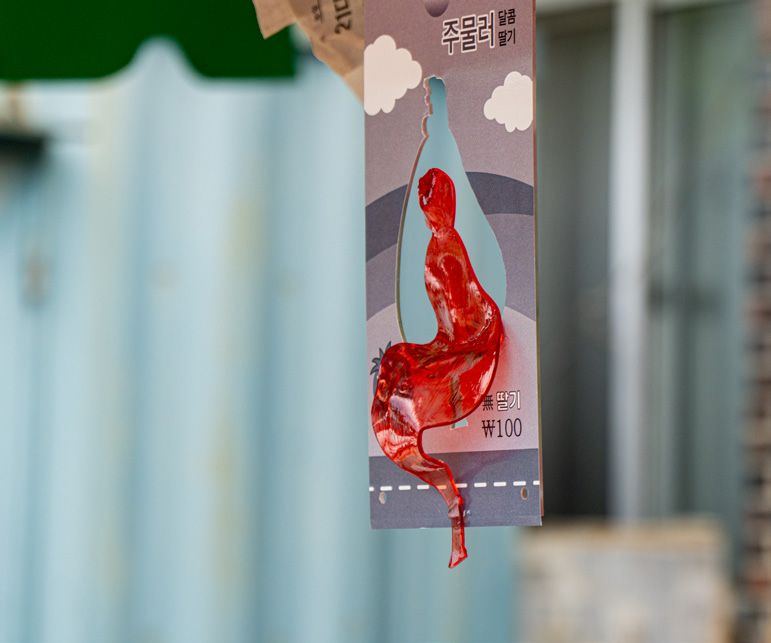
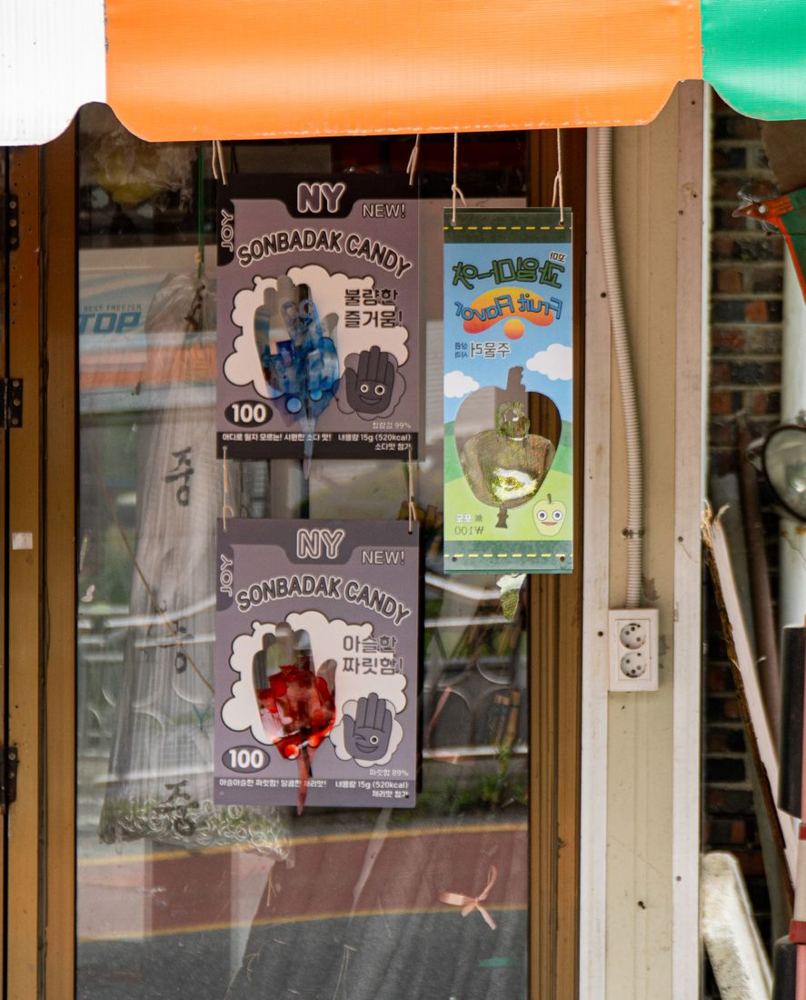
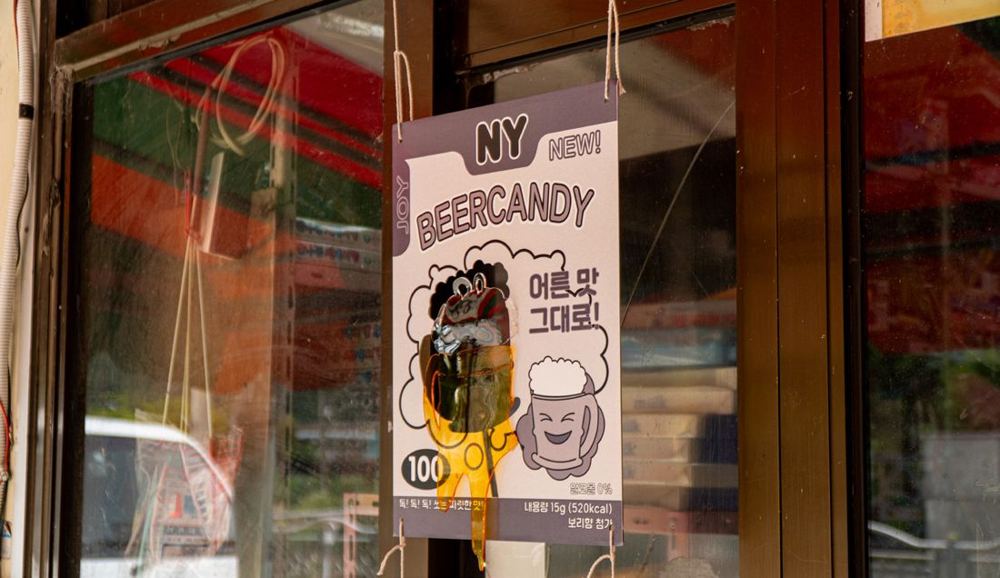
이번 작업은 여름날의 추억을 상징하는 저가 아이스크림에서 출발해, 이제는 사라진 문방구의 불량식품들을 다시 바라본다. 동글동글하고 녹아내리는 듯한 형태의 아크릴 조형물은 알록달록한 색감과 투명한 재질로 시선을 사로잡지만, 동시에 유리처럼 아슬아슬하고 깨질 듯한 긴장감을 품고 있다. 선반 위, 창틀, 간판 옆 등 불안정하게 걸쳐진 배치는 과거의 짜릿한 즐거움을 환기시키는 동시에, 오늘날 사회가 추구하는 절대적 ‘안전’에 대한 은유이자 풍자로 읽힌다.
Born in 1993, I went to Sokcho Elementary School and would stop by Namyoung Stationery with my sister after class — instant noodles, prize games, cheap snacks with friends to close the day. The shop was not simply a place of consumption; for children it was a hideout and an everyday playground of games, chatter and small conspiracies.
Today the shop is a place children no longer enter — its function stopped, but not entirely switched off. Changes in health and safety regulation removed the cheap snacks and the “dangers” from around schools, and with them the space for children’s small deviations, adventures and precarious pleasures.
The work begins with the cheap ice pops that stand for summer memories, and looks again at the snacks that have vanished from stationery stores. Rounded, seemingly melting acrylic pieces catch the eye with bright colour and transparency, yet hold a glass-like tension, as if about to break. Perched precariously on shelves, window frames and beside signs, they recall the thrill of the past while working as a metaphor — and a satire — of today’s pursuit of absolute safety.
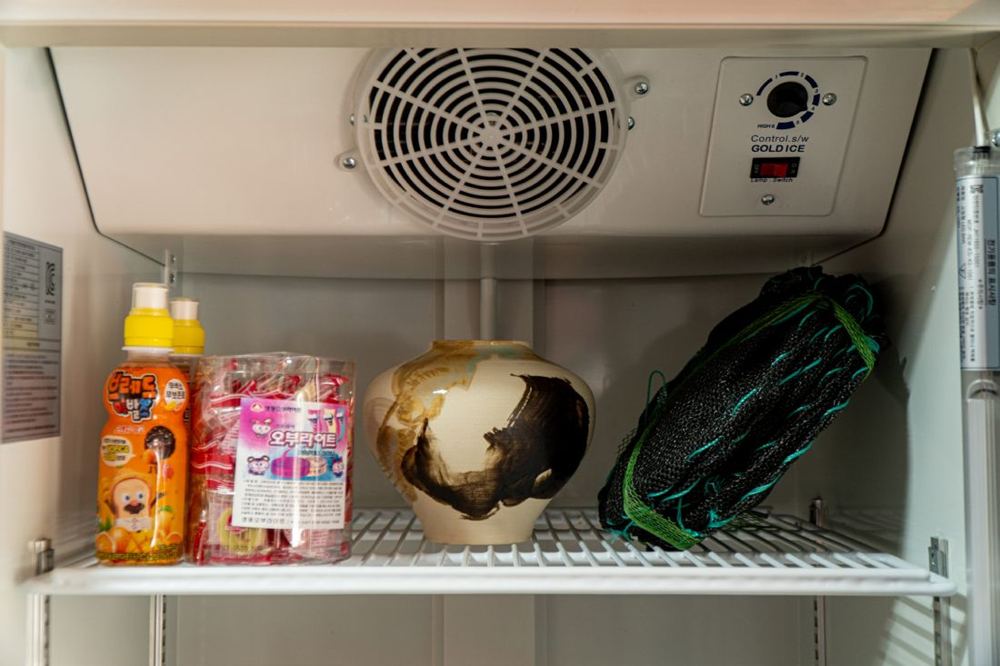
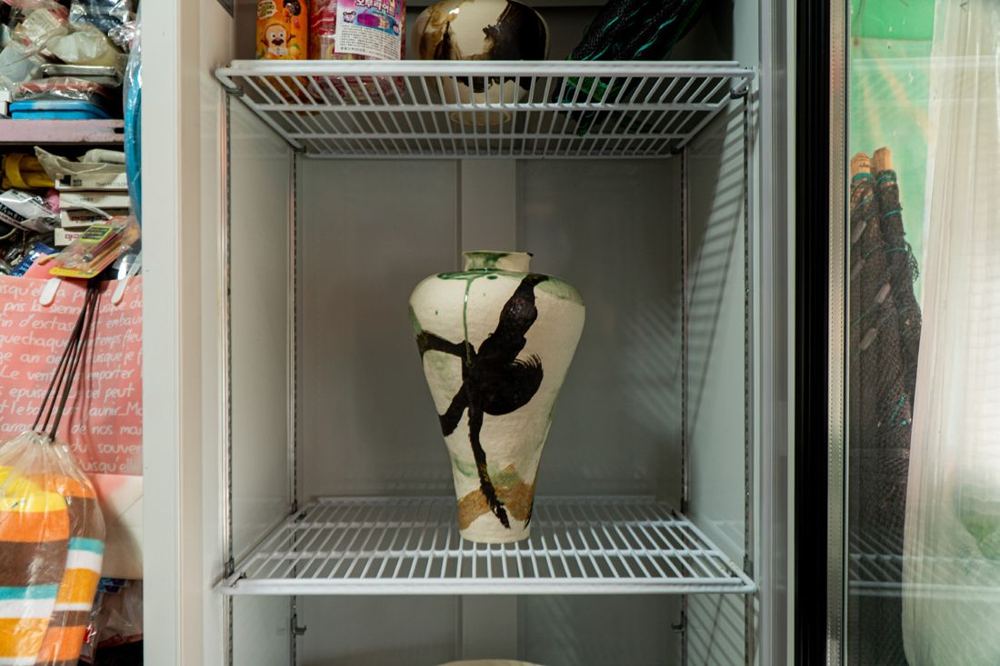
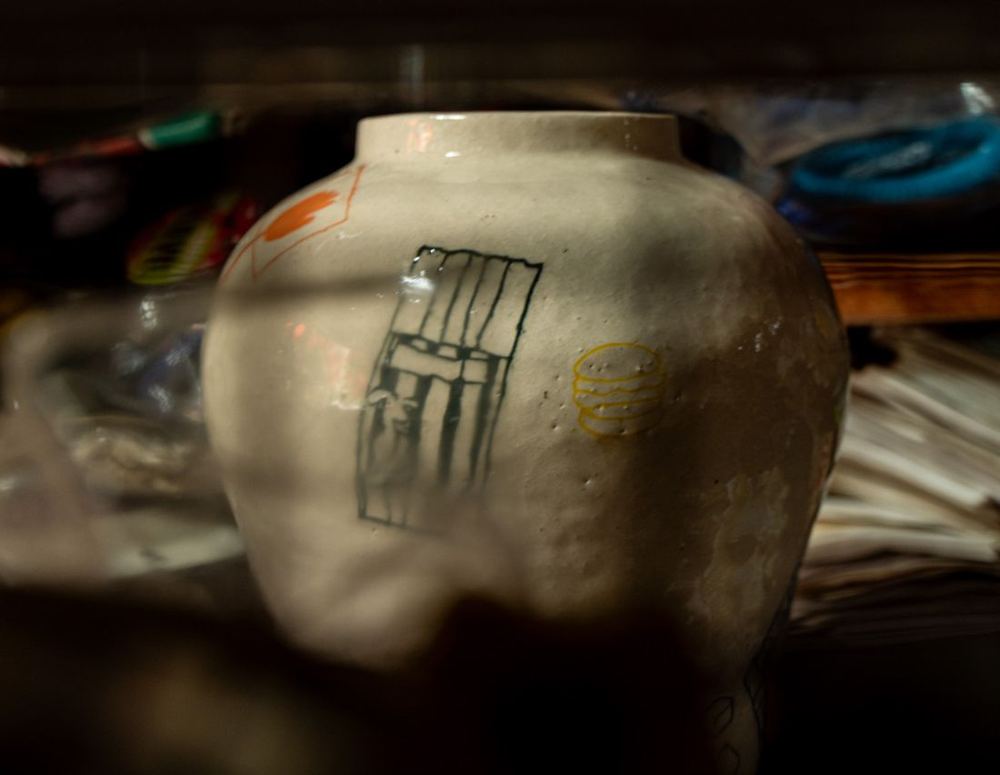
<향수 판박이>는 두 겹의 흔적을 품는다. 첫 번째는 문구사에 대한 기억이다. 하교길마다 친구들과 들르던 그곳은, 쫀득이와 보석반지 같은 불량식품이 가득하던 ‘아이들의 작은 우주’였다. 나는 그 사물들을 상감 기법으로 도자기에 새겼다. 어린 날 팔에 옮겨 붙이던 판박이처럼, 흙 표면 위 이미지들은 다시 만지기 어렵지만 언제나 마음속에 또렷이 남아 있는 시간의 조각들이다.
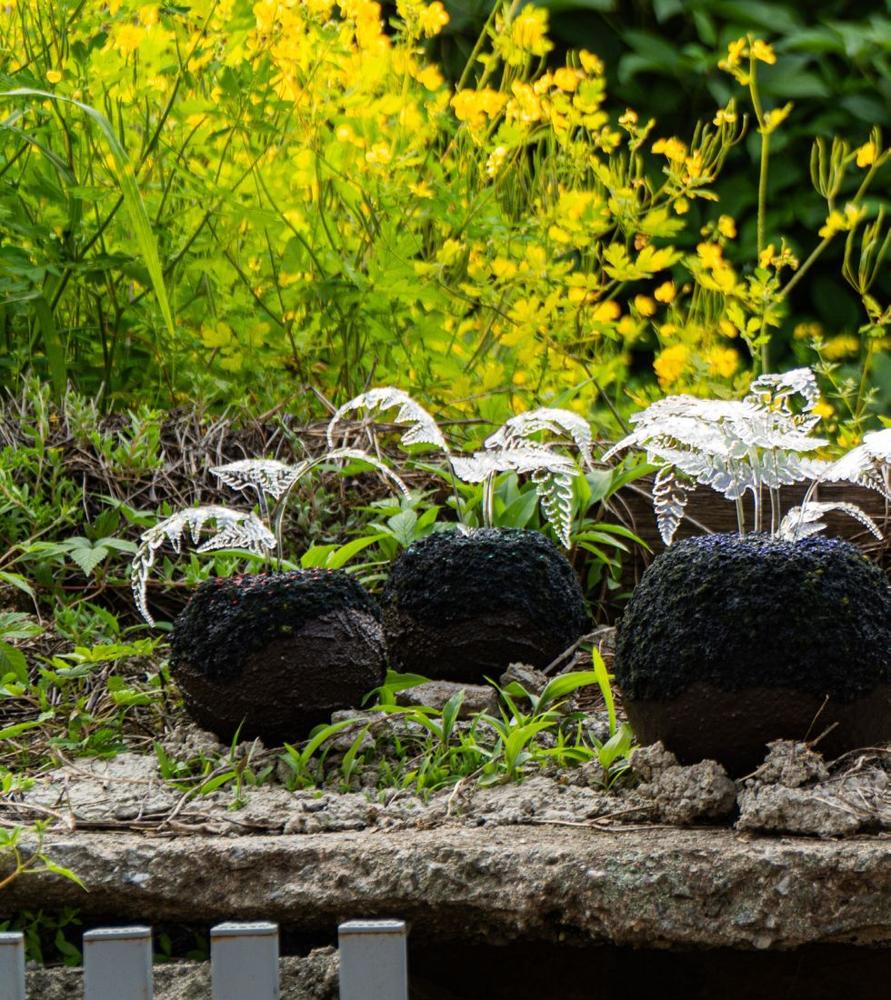
두 번째는 영귀미면의 풍경에서 비롯된다. 마을을 감싸는 하늘과 밭, 나무와 바람은 특별한 사건 없이도 오래도록 시야에 머물렀다. 나는 그 잔상을 색의 흐름과 자유로운 붓질로 옮겨 놓았다. 구체적 형태를 지우고 남은 색채의 리듬은, 한적한 오후의 공기와 빛을 고스란히 전한다.
비록 서로 다른 방식과 기법을 택했지만, 두 작업은 ‘간직하고 싶은 것들을 도자기에 머무르게 한다’는 같은 마음에서 만난다.
<Nostalgic Transfer> holds two layers of memory. The first is of the stationery store. Visited with friends on the way home, it was a small universe of children full of chewy candy and toy rings. I carved those objects into clay with an inlay technique. Like the decals we used to stick on our arms, the images on the surface are hard to touch now, yet stay clearly in the heart as pieces of time.
The second comes from the landscape of Yeonggwimi-myeon. The sky, fields, trees and wind that wrap the village stayed in my eyes for a long time, even without any particular event. I moved that afterimage into flowing colour and free brushwork. With concrete forms erased, the rhythm of colour carries the air and light of a quiet afternoon.
Different in method and technique, the two works meet in the same wish: to let the things one wants to keep remain in ceramic.
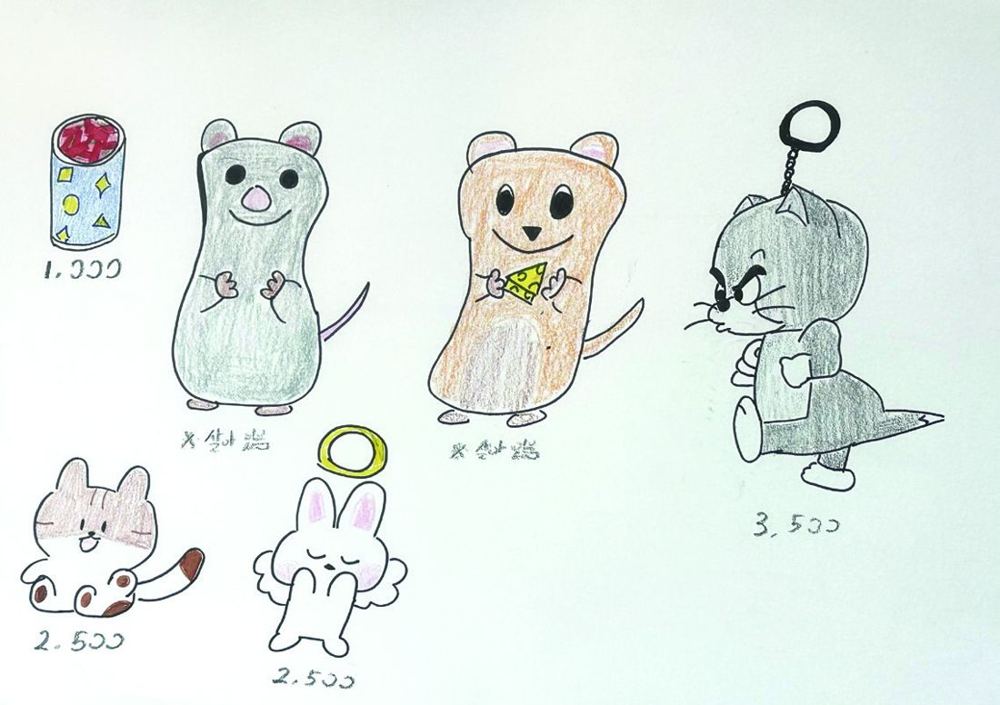
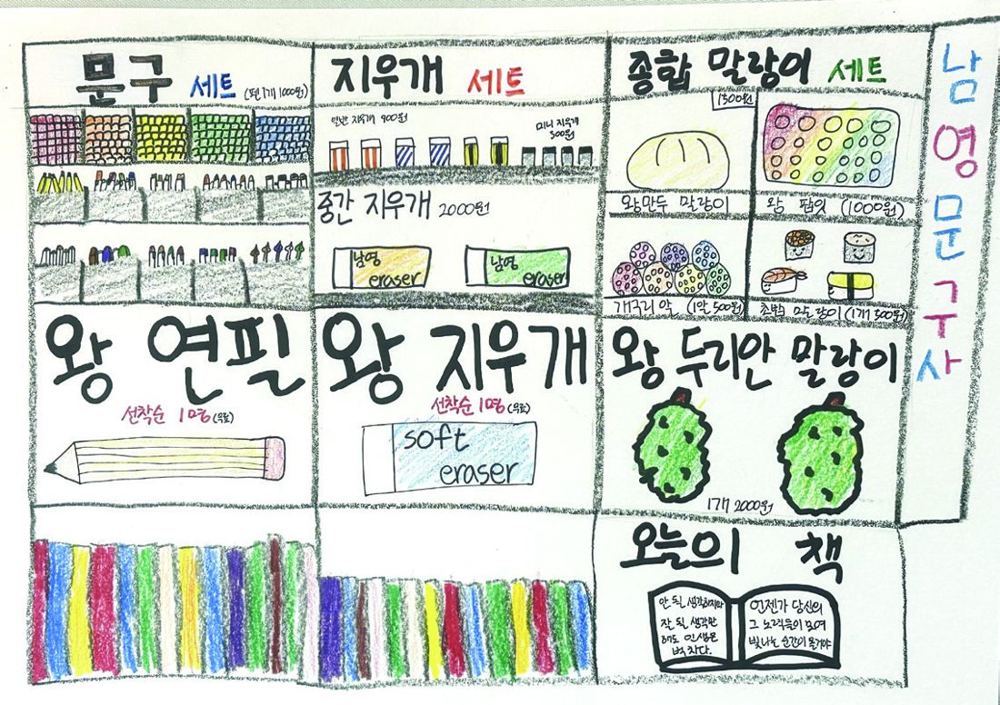
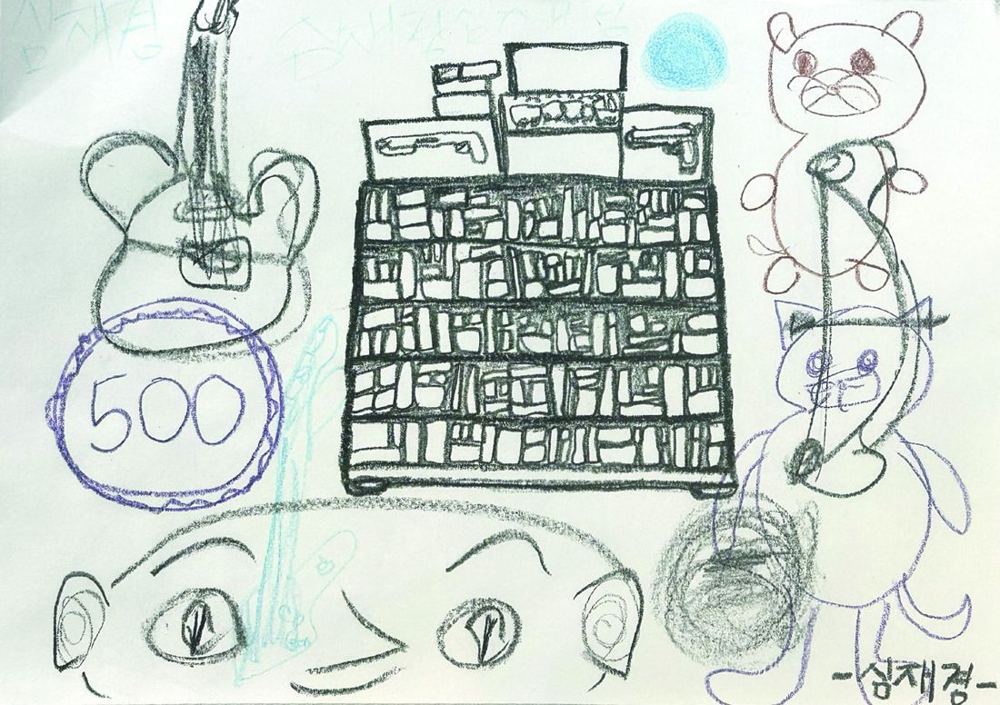
《영영 남을 이야기》전의 연계 프로그램으로, 영귀미면에 거주하는 청소년들이 상상력을 발휘해 남영문구사를 재해석해보는 데 목적이 있다. 참여 청소년들은 자신이 상상한 남영문구사의 모습이 담긴 그림에 직접 가격을 매기고, 이를 판매하는 활동을 통해 남영문구사의 기억을 ‘상점’이라는 기능과 연결해 되새겨 본다.
현재 영귀미면에 살고 있는 아이들은 남영문구사의 과거 모습을 직접 경험한 세대가 아니다. 그러나 이 공간은 누군가에게는 놀이터였고, 추억이 깃든 장소였으며, 37년 동안 마을 주민들과 함께해 온 경험과 감정, 관념이 축적된 주관적 역사가 살아 있는 장소이다. 청소년들은 자신만의 창의적 상상력을 통해 남영문구사를 새로운 추억의 공간으로 다시 만들어보고자 한다.
각자 새롭게 해석한 그림에 스스로 가격을 책정하고 판매해보는 경험은, 단순히 미술작품을 판매하는 것을 넘어 남영문구사의 과거 기억과 정서를 ‘거래’하는, 즉 기억을 나누는 행위로 확장된다. 이를 통해 남영문구사가 지닌 ‘상점’으로서의 기능 역시 상징적으로 복원된다.
A programme linked to《Young Forever: A Story of Namyoung》, in which young people living in Yeonggwimi-myeon reimagine the stationery store. Participants priced their own drawings of an imagined Namyoung Mungusa and sold them, connecting the memory of the shop back to its function as a store.
Children living in Yeonggwimi today are not the generation that experienced the shop in its earlier days. Yet for others it was a playground and a place of memory — a site where 37 years of feeling and experience have accumulated into a living, subjective history. Through their own imagination, the young participants remade it as a new space of memory.
Pricing and selling their own reinterpretations went beyond selling artworks: it became an act of trading — and thereby sharing — the memories and feelings attached to the shop, symbolically restoring its function as a store.